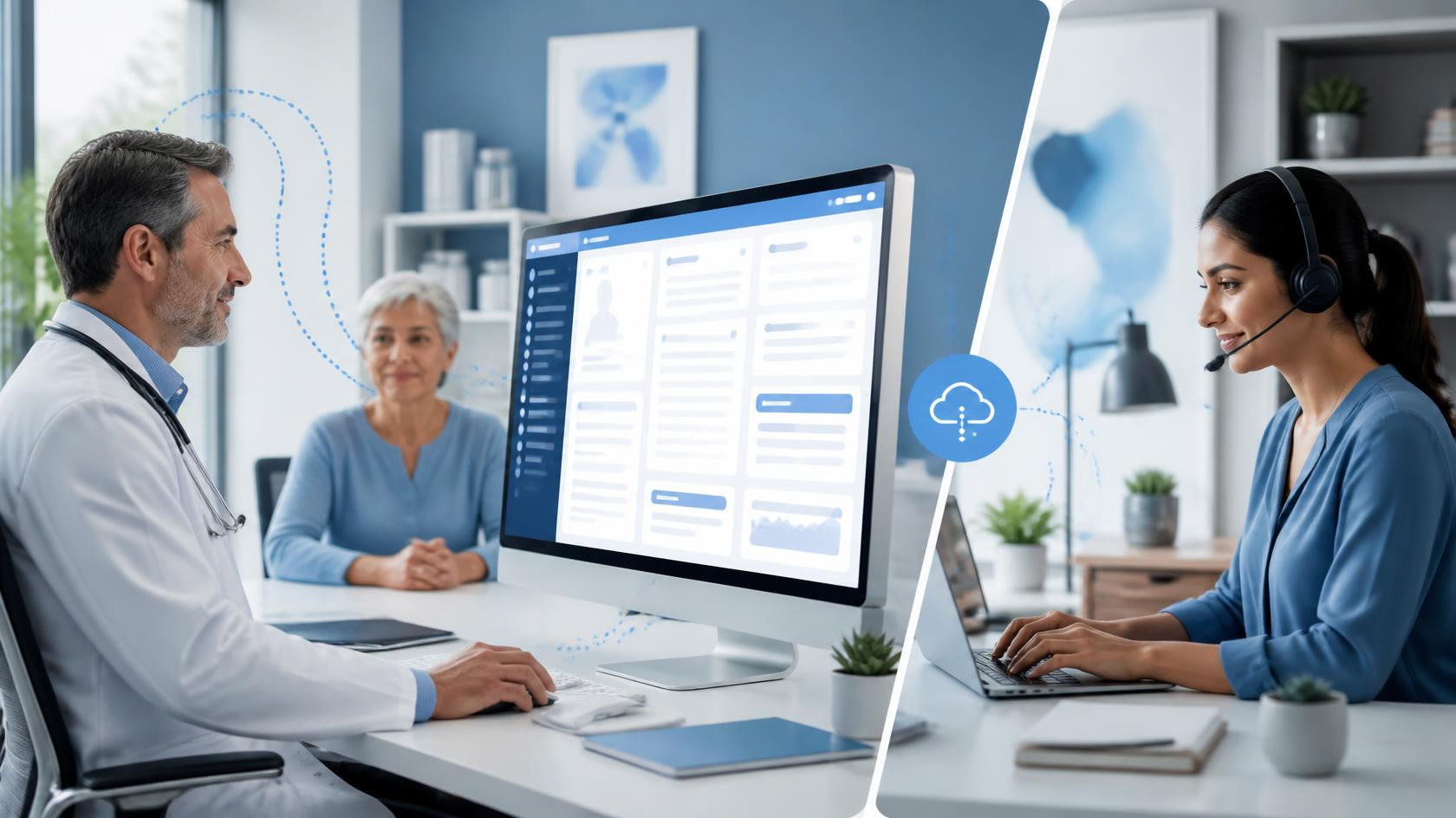
How Virtual Medical Assistants
Improve EHR Data Quality

Electronic Health Records (EHRs) have transformed healthcare by making patient information more accessible, improving care coordination, and supporting better clinical decisions. However, the value of an EHR depends on one critical factor data quality. Incomplete patient records, duplicate entries, outdated demographics, and documentation inconsistencies can affect everything from patient care to billing accuracy.
As healthcare organizations continue to manage increasing patient volumes, maintaining accurate Electronic Health Records has become a growing challenge. Physicians and front-office staff often have limited time to review every detail while balancing patient care and administrative responsibilities.
This is where a Virtual Medical Assistant (VMA) provides measurable value. By supporting administrative workflows related to patient records, appointment information, insurance updates, and EHR maintenance, virtual medical assistants help healthcare practices keep electronic health records organized, complete, and reliable.
Rather than replacing clinical staff, virtual medical assistants strengthen existing workflows by reducing administrative burdens and improving the quality of information available throughout the patient journey.
Why EHR Data Quality Matters More Than Ever
An Electronic Health Record is much more than a digital filing system. It serves as the foundation for communication between providers, clinical documentation, scheduling, billing, and long-term patient care.
When patient information is accurate and consistently maintained, healthcare teams can work more efficiently while reducing avoidable administrative errors.
Poor EHR data quality may result in:
- Duplicate patient records
- Missing demographic information
- Incorrect insurance details
- Scheduling inaccuracies
- Delays in clinical documentation
- Billing and coding challenges
- Inefficient patient communication
Even minor errors can create unnecessary work for administrative teams and delay the delivery of care.
The Growing Challenge of Maintaining
Accurate Patient Records
Healthcare practices generate thousands of data points every month. Every patient interaction introduces new information that must be reviewed, verified, and documented correctly.
Administrative teams often manage:
- New patient registrations
- Insurance updates
- Referral documentation
- Appointment changes
- Contact information updates
- Consent forms
- Follow-up scheduling
Without a structured workflow, records can quickly become inconsistent, making it harder for providers to locate accurate patient information when they need it most.
How Virtual Medical Assistants
Strengthen EHR Data Quality
Maintaining high-quality EHR data is not a one-time task it requires continuous attention.
A healthcare virtual assistant supports this process by reviewing administrative information, updating records, and ensuring patient data remains current throughout the care journey.
Their responsibilities often include verifying demographic details, updating insurance information, documenting administrative notes, organizing patient records, and preparing information before scheduled appointments.
This proactive approach reduces inconsistencies before they become larger operational problems.
Keeping Patient Demographics Accurate
Virtual medical assistants help improve data accuracy by routinely reviewing:
- Patient addresses
- Phone numbers
- Email addresses
- Emergency contacts
- Insurance policy information
- Preferred communication methods
Supporting Better
Appointment Documentation
Accurate scheduling information plays an important role in maintaining reliable Electronic Health Records.
Every appointment generates administrative updates that should be reflected within the patient's record.
Virtual medical assistant services help practices maintain consistency by documenting:
- Appointment confirmations
- Cancellations
- Rescheduled visits
- Referral appointments
- Follow-up recommendations
- Administrative communication
When appointment histories remain complete, providers gain a clearer understanding of each patient's healthcare journey.
Reducing Duplicate
Patient Records
Duplicate records are a common challenge for growing healthcare organizations.
They often occur when patients register using different contact information, visit multiple locations, or unintentionally create new profiles.
Duplicate records can lead to:
- Incomplete medical histories
- Administrative confusion
- Delayed clinical decisions
- Increased documentation review time
Virtual medical assistants assist administrative teams by identifying potential duplicate entries, verifying patient information, and supporting standardized registration workflows that reduce future duplication.
Improving Insurance Information Accuracy
Insurance verification is closely connected to EHR quality.
Incorrect payer information often creates delays in claims processing and increases administrative work for billing teams.
A virtual medical assistant helps maintain updated insurance details before scheduled appointments, ensuring patient records reflect current coverage information whenever possible.
Accurate insurance records also improve communication between administrative staff, providers, and revenue cycle teams.
Preparing Records
Before Patient Visits
Well-prepared records allow providers to spend less time searching for information and more time focusing on patient care.
Before appointments, virtual medical assistants can review administrative sections of the Electronic Health Record to confirm that essential information has been updated.
This preparation may include checking patient demographics, confirming referral documentation, verifying insurance details, and ensuring appointment notes are complete.
Small improvements before each visit contribute to a more organized clinical workflow.
Supporting Consistent
Healthcare Documentation
Consistency is essential when multiple administrative staff members access the same Electronic Health Record system.
Virtual medical assistants follow established documentation procedures that help maintain standardized administrative records across the practice.
This consistency improves:
- Record organization
- Information retrieval
- Administrative efficiency
- Provider communication
- Practice workflow
A standardized process also reduces confusion when patients receive care from multiple providers or visit different office locations.
Helping Healthcare Teams
Focus on Patient Care
Administrative work continues long after a patient leaves the office.
Updating records, reviewing patient information, managing referrals, and maintaining accurate scheduling all require significant time.
By handling these routine administrative responsibilities remotely, virtual medical assistants allow physicians and in-office staff to dedicate more attention to patient care rather than repetitive data management.
The result is a more balanced workflow that benefits providers, staff, and patients alike.
Supporting Long-Term
Practice Growth
As healthcare organizations expand, maintaining clean and organized Electronic Health Records becomes increasingly important.
Whether adding new providers, opening additional locations, or serving larger patient populations, scalable administrative support helps practices maintain operational consistency.
Virtual medical assistants provide flexible support that grows alongside the practice while helping maintain high standards for data quality and administrative accuracy.
Best Practices for
Improving EHR Data Quality
Improving Electronic Health Record accuracy requires continuous attention rather than occasional updates.
Healthcare organizations can strengthen their workflows by:
- Reviewing patient information during every visit.
- Standardizing registration procedures.
- Updating insurance information proactively.
- Verifying demographic changes regularly.
- Maintaining consistent administrative documentation.
- Monitoring duplicate patient records.
- Providing ongoing staff training on EHR workflows.
Combining these practices with experienced virtual administrative support creates a stronger foundation for long-term operational success.
Improve EHR Accuracy with Experienced
Virtual Medical Assistant Services
High-quality Electronic Health Records support better patient care, smoother administrative operations, and more efficient healthcare delivery. Maintaining that level of accuracy requires consistent attention to detail and well-organized administrative processes.
At Chase Clinical Documentation, our experienced Virtual Medical Assistants help healthcare organizations maintain accurate patient records, streamline administrative workflows, improve EHR data quality, and reduce the workload placed on in-house teams.
Whether your practice is focused on improving data accuracy, optimizing healthcare workflows, or enhancing operational efficiency, our virtual medical assistant solutions provide reliable support that scales with your organization's needs.
FAQ
Why is accurate EHR data important for healthcare practices?
Accurate Electronic Health Records improve patient safety, streamline administrative workflows, support better clinical decision-making, and reduce billing and scheduling errors.
How do virtual medical assistants help maintain patient records?
Virtual medical assistants support administrative tasks such as updating demographics, reviewing insurance information, documenting appointment changes, coordinating referrals, and helping maintain organized patient records.
Can better EHR data improve operational efficiency?
Yes. Clean and consistent patient records reduce duplicate work, improve communication between departments, and help providers access reliable information more quickly.
Do virtual medical assistants work with different EHR systems?
Many experienced virtual medical assistants are familiar with leading Electronic Health Record and practice management platforms, allowing them to adapt to different healthcare workflows.
What types of healthcare organizations benefit from improved EHR data quality?
Primary care practices, specialty clinics, outpatient centers, physician groups, and multi-location healthcare organizations can all benefit from maintaining accurate and organized Electronic Health Records.
Recent Posts