Virtual Medical Scribe for Cardiology:
Documentation Patterns That Support Accurate CPT Coding
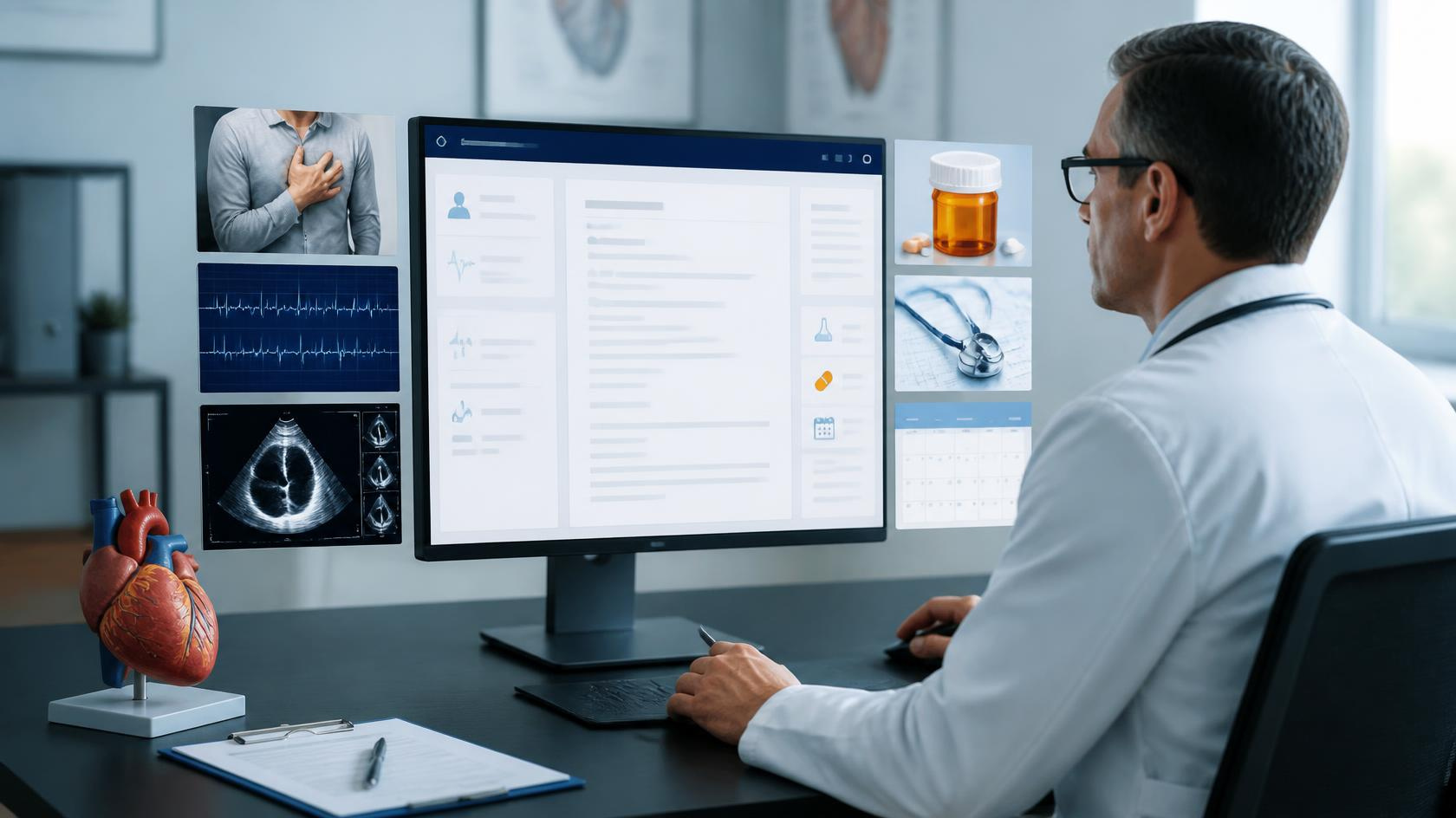
A cardiology note can carry more clinical weight than almost any other specialty document. A single encounter might involve a review of echocardiogram findings, medication adjustments for a patient with decompensated heart failure, risk stratification for a new arrhythmia, and a follow-up plan tied to specific monitoring thresholds. The challenge is not simply recording what was said. It is organizing what was clinically relevant so the finished note accurately reflects the encounter and provides a clear record for physician review and coding evaluation.
A
virtual medical scribe for cardiology
supports that process by capturing and structuring the clinical information generated during the encounter so the physician can review, approve, and sign a note that genuinely reflects the work performed.
The Cardiology Documentation Signal Map
Not every encounter requires the same documentation structure. But across cardiology visit types, a set of recurring documentation signals determines how well the finished note represents the clinical encounter. These signals are what a trained cardiology medical scribe should be listening and organizing for.
1. Reason for the encounter and problems addressed today
What brought the patient in, and what conditions were actually evaluated or managed? A note that lists chronic diagnoses without specifying which were addressed during this visit leaves the record unclear.
2. Relevant symptoms and clinical status
Current symptom burden matters not just what the patient reports in passing, but what the physician found clinically relevant to assess. For heart failure, this might include functional status, fluid retention, or exertional tolerance.
3. Diagnostic data reviewed or interpreted
Did the physician review an ECG, an echocardiogram, a Holter monitor report, or lab values? What findings were noted? The record should reflect that a test was reviewed and what was observed not just that it was ordered.
4. The physician's assessment and clinical reasoning
This is the core of the clinical note. The physician's interpretation of findings, clinical conclusions, and the reasoning behind decisions belong here. A scribe captures what is documented; the physician owns and approves the clinical assessment.
5. Treatment and medication decisions
Were medications adjusted, added, or discontinued? Was a new therapy initiated? The reason for changes and the specific plan should be visible in the record.
6. Procedures or services performed during the encounter
If a service was rendered an in-office ECG interpretation, a device interrogation, a stress test review the record should reflect what was done and the clinical context.
7. Follow-up, monitoring, and medical necessity context
What is the plan going forward? What conditions, symptoms, or results warrant follow-up? This context supports the documented clinical rationale.
These signals do not function as a checklist to complete regardless of encounter type. They describe what belongs in the record when it is clinically present and relevant.

Where the Signals Appear
in Real Cardiology Encounters
Encounter A — Heart Failure Follow-Up
A patient with chronic systolic heart failure returns for a three-month follow-up. The physician reviews recent BNP results, assesses current functional status, notes the patient's report of increased lower extremity swelling over the past two weeks, and adjusts the diuretic regimen. Echocardiogram findings from last month are referenced in the assessment.
A well-organized note captures the current symptom status, the specific findings reviewed, the medication change with its rationale, and the follow-up threshold return sooner if symptoms worsen, otherwise in eight weeks with repeat labs. This documentation makes the physician's decision-making process visible across all dimensions the encounter actually covered.
Encounter B — Atrial Fibrillation and Medication Management
A patient established on anticoagulation and rate control therapy returns after a period of documented symptomatic episodes. The physician reviews rate control trends, discusses stroke risk in the context of the patient's current clinical picture, and evaluates medication tolerability. A rhythm management decision is documented along with the reasoning.
Here, the documentation signal is not just what medications are listed it is whether the physician's evaluation of the clinical situation, the options considered, and the treatment direction are clearly recorded. That distinction matters when the note is later reviewed.
Encounter C — Cardiac Device Follow-Up
A patient with an implantable cardioverter-defibrillator presents for a scheduled remote device interrogation reviewed in-office. The physician reviews stored electrograms, assesses therapy delivery history, evaluates current programming, and documents clinical impressions. No acute intervention is required; the plan includes continued monitoring with the next interrogation scheduled.
The record should clearly reflect that device data was reviewed, what was found, what clinical conclusions were drawn, and what the follow-up plan is. The service performed should be identifiable from the documentation itself not inferred.
What the Scribe Captures vs.
What the Physician Decides
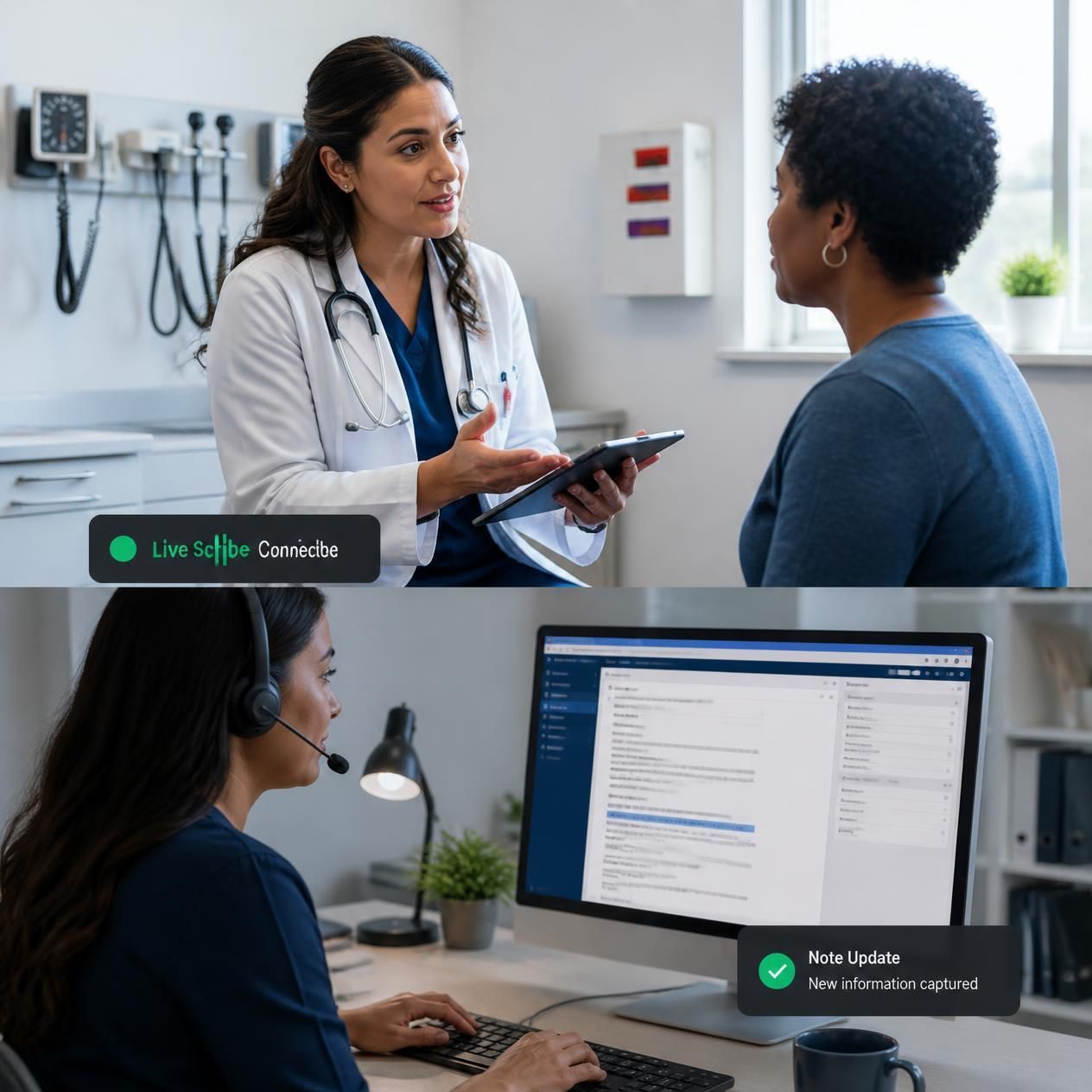
A virtual cardiology scribe works in real time or post-visit to organize clinical information into a structured note. What they capture comes from what the physician communicates during the encounter verbally, through dictation, or through documentation review.
The physician's role is not diminished by this process. Clinical judgment, diagnostic interpretation, treatment decisions, and note approval belong entirely to the physician. The scribe's contribution is organizational: structuring the encounter details in a way that makes the physician's work accurately visible in the medical record.
Qualified coding professionals then review the documentation to apply appropriate coding rules a step distinct from both the clinical encounter and the documentation process itself.

Documentation Specificity
Over Documentation Length

A Practical Pre-Signoff
Check for Cardiology Notes
Before signing, a cardiologist might ask:
- Does this note accurately reflect what happened during the encounter?
- Are the specific problems addressed today identifiable?
- Is the diagnostic data I reviewed documented with relevant findings?
- Are any procedures or in-office services clearly represented?
- Does my assessment and plan match the clinical picture documented?
This is not a billing checklist. It is a record-accuracy review. The goal is a note that stands as an honest, complete account of the clinical encounter one that a qualified coding reviewer can evaluate against current coding guidance.
Chase Clinical Documentation's virtual medical scribe services are built around specialty-aware documentation support, including for high-complexity encounters in cardiology. Where AI-assisted documentation is part of the workflow, EzyScribe supports structured capture that trained scribes and physicians can review and finalize.
For practices evaluating EHR-specific scribe workflows or complex patient documentation, specialty-calibrated support makes a meaningful difference in how well the record reflects the clinical work performed. Practices interested in how documentation connects to the review process may also find value in reviewing medical coding services as a complementary resource.
Accurate cardiology documentation starts with capturing what was clinically relevant, organized in a way the physician can verify. Everything downstream from physician approval to coding reviewcdepends on what that note actually says.
FAQ
What does a virtual medical scribe document for a cardiologist?
A virtual medical scribe for cardiology captures and organizes the clinical information generated during the encounter including problems addressed, symptoms evaluated, diagnostic data reviewed, the physician's assessment and clinical decisions, treatment changes, procedures performed, and the follow-up plan. The physician reviews and approves the final note.
How can a virtual medical scribe support CPT coding?
A scribe supports CPT coding by helping produce a note that clearly reflects the clinical work performed what was addressed, reviewed, decided, and done. This gives the physician and qualified coding professionals a clearer record to evaluate. The scribe organizes documentation; coding professionals apply current coding rules.
Can a virtual medical scribe assign CPT codes?
No. A virtual medical scribe is a documentation support role. CPT code assignment is a professional coding function performed by qualified coders applying current AMA and payer guidelines. The scribe's role is to help ensure the note accurately captures what occurred during the encounter.
What cardiology documentation details support coding review?
Details that support coding review include: the specific conditions addressed during the visit, clinical findings and their significance, diagnostic data reviewed with noted findings, the physician's assessment and reasoning, treatment or medication decisions, services or procedures performed, and the follow-up plan. Internally consistent documentation that matches the clinical work is more valuable than length alone.
Does a longer cardiology note improve CPT coding accuracy?
Not inherently. Under current E/M guidelines, code selection is based on medical decision making or total time not note volume. A specific, accurate, internally consistent note that reflects what actually happened during the encounter supports coding review far more effectively than a lengthy note with vague or redundant content.
Recent Posts