Virtual Medical Scribes for Pediatrics: Managing Documentation Across Every Stage of Care

A pediatrician’s work involves more than examining a child and recording a diagnosis. Each appointment may include conversations with parents, developmental assessments, medication histories, preventive care discussions, and follow-up planning. Managing these details while maintaining an efficient consultation schedule can create considerable documentation responsibilities for pediatric practices.
A virtual medical scribe for pediatrics helps organize clinical information from patient encounters into structured medical notes for physician review. From infant well-child appointments to adolescent consultations, virtual medical scribing can support documentation workflows while allowing pediatricians to concentrate on patient care and communication with families.
However, pediatric documentation is not the same as documenting an adult consultation. The child’s age, developmental stage, caregiver involvement, and type of appointment all influence what information needs to be captured and how it should be attributed.
Understanding these differences helps pediatric practices determine where virtual medical scribes can contribute to their everyday workflows.
A Pediatric Appointment Is More Than a Medical Conversation
A typical pediatric consultation may involve several participants. A young child might communicate symptoms differently from an older patient, while a parent or guardian provides additional information about changes observed at home.
The pediatrician must consider these different perspectives when documenting the encounter.
For example, during a consultation, a parent might describe changes in a child’s appetite, while the child explains that they have been experiencing discomfort. The physician then conducts an examination and documents the relevant clinical findings.
These are three different sources of information that should remain distinguishable in the medical record.
Pediatric clinical documentation may involve:
- Patient-reported symptoms and concerns.
- Parent or guardian observations.
- Medical and developmental history.
- Growth-related information.
- Medication and allergy history.
- Screening and preventive care discussions.
- Physician examination findings.
- Assessment and follow-up instructions.
A pediatric medical scribe helps organize this information according to the provider’s preferred documentation structure.
Inside the Pediatric Documentation Workflow
The documentation requirements of a pediatric appointment depend on its purpose. A preventive visit, an acute consultation, and a follow-up appointment each require different information to be organized.
1. Well-Child Visits: Capturing Growth and Development
Well-child visits allow pediatricians to monitor a child’s physical growth, developmental progress, and preventive healthcare needs.
These appointments may involve discussions about nutrition, feeding, sleep, behavior, developmental milestones, and age-appropriate screenings.
A virtual medical scribe can help organize:
- Relevant growth measurements provided by the clinical team.
- Developmental history and milestone discussions.
- Feeding and nutritional information.
- Sleep patterns and behavioral observations.
- Parent or caregiver concerns.
- Screening information and preventive care discussions.
- Physician-directed anticipatory guidance.
- Follow-up recommendations.
Example: During an infant’s well-child appointment, the parent discusses feeding patterns, sleep routines, and developmental observations. The pediatrician reviews the child’s growth information and discusses age-appropriate preventive care.
The scribe organizes the available information into the relevant note sections, following the physician’s instructions.
The American Academy of Pediatrics (AAP) Bright Futures program provides guidance on age-specific preventive care, developmental screening, and anticipatory guidance.
Reference: AAP Bright Futures Periodicity Schedule.

2. Sick Visits: Organizing Symptoms and Clinical Findings
Acute pediatric consultations often involve detailed symptom histories provided by parents or directly by older children.
Common reasons for sick visits include fever, cough, respiratory symptoms, ear pain, gastrointestinal complaints, and other acute concerns.
Documentation may include:
- Chief complaint.
- Symptom onset and duration.
- Changes in symptom severity.
- Relevant medical history.
- Medication and allergy information.
- Parent-reported observations.
- Physician-provided examination findings.
- Assessment and treatment plan.
- Return precautions and follow-up instructions.
Example: A parent brings a seven-year-old child to the clinic because of a persistent cough. The parent explains when the symptoms started and describes changes in appetite and sleep. The child also reports discomfort while coughing.
The pediatrician evaluates the child and documents the examination findings and clinical assessment. The virtual medical scribe organizes the relevant history and physician-provided information into the medical note.
The pediatrician reviews and approves the documentation before finalizing the encounter.

3. Follow-Up Visits: Maintaining Clinical Continuity
Pediatric follow-up appointments help providers understand how a child is progressing after an illness, treatment, or previous consultation.
Unlike an initial appointment, a follow-up often requires reviewing changes since the last encounter.
Important documentation areas include:
- Changes in previously reported symptoms.
- Response to treatment.
- Medication updates.
- New concerns from parents or caregivers.
- Relevant examination findings.
- Additional testing or referral discussions.
- Next steps and follow-up timing.
For example, a pediatrician reviewing a child’s follow-up after a respiratory illness may need to document whether symptoms have improved, whether medication has changed, and whether additional evaluation is necessary.
A virtual scribe can help organize these updates within the existing EHR documentation structure, supporting continuity across appointments.
4. Adolescent Consultations: Preserving the Context of the Encounter
Adolescent healthcare introduces additional documentation considerations because teenagers may communicate directly with physicians while parents or guardians also participate in appointments.
The documentation process should accurately distinguish information shared by the adolescent from information provided by a parent or guardian.
Depending on the consultation and applicable laws, confidentiality requirements may also influence how information is handled.
A pediatric medical scribe may assist with organizing:
- Adolescent-reported concerns.
- Relevant caregiver-provided history.
- Medical and medication history.
- Physician examination findings.
- Assessment and care planning.
- Follow-up instructions.
The scribe should follow the practice’s confidentiality procedures and should not independently determine what information may be disclosed to a parent or guardian.
When Parents, Children, and Physicians All Contribute to the Record
Caregiver communication is one of the defining characteristics of pediatric documentation.
Parents and guardians frequently provide important details about symptoms, medication use, sleep, feeding, behavioral changes, and health concerns observed outside the clinic.
A virtual medical scribe must preserve the source of the information rather than combining every statement into a single patient-reported narrative.
Consider this example:
| Participant | Information provided |
|---|---|
| Parent | Reports reduced appetite over the past three days. |
| Child | Describes abdominal discomfort. |
| Pediatrician | Documents examination findings and clinical assessment. |
Each contribution has a different role in the encounter.
The documentation should reflect these distinctions accurately, especially when multiple people participate in the consultation.
This is particularly relevant in appointments involving interpreters , guardians, or other family members.
For more information, see How Virtual Medical Scribes Document Multi-Speaker Clinical Encounters .

What Should a Well-Organized Pediatric Clinical Note Contain?
A pediatric clinical note should capture relevant information from the encounter without introducing unsupported findings or unnecessary repetition.
The exact format depends on the provider’s preferences, EHR templates, and type of appointment.
A typical structured note may include:
| Note section | Documentation content |
|---|---|
| Chief Complaint | Main reason for the appointment |
| HPI | Symptoms, duration, progression, and relevant history |
| Relevant History | Medical, developmental, medication, and allergy history |
| ROS | Relevant review of systems information |
| Physical Examination | Findings provided by the examining clinician |
| Assessment | Physician-established clinical assessment |
| Plan | Treatment, counseling, testing, and follow-up instructions |
For well-child visits, additional sections may address developmental history, growth, nutrition, preventive screening, and anticipatory guidance.
For acute visits, the documentation may focus more heavily on symptom history, examination findings, assessment, and the treatment plan.
The goal is not simply to create longer notes . It is to ensure that relevant clinical information is organized clearly and accurately.

Where Virtual Scribing Fits Into a Pediatric Practice
Virtual medical scribing can be incorporated into an existing pediatric documentation process without changing the physician’s responsibility for the medical record.
A typical workflow may involve several stages:
Before the encounter: The scribe accesses only the information authorized by the practice and follows the established preparation procedures.
During the encounter: Relevant information is captured according to the agreed scribing workflow, including appropriate attribution of patient and caregiver statements.
After the encounter: The information is organized into the provider’s preferred note format and relevant EHR sections.
Physician review: The pediatrician checks the note, verifies its accuracy, makes necessary corrections, and completes the required authentication.
The exact process depends on the EHR environment, service arrangement, and documentation responsibilities assigned to the scribe.
For additional information, read How Virtual Medical Scribes Adapt to Different EHR Workflows.
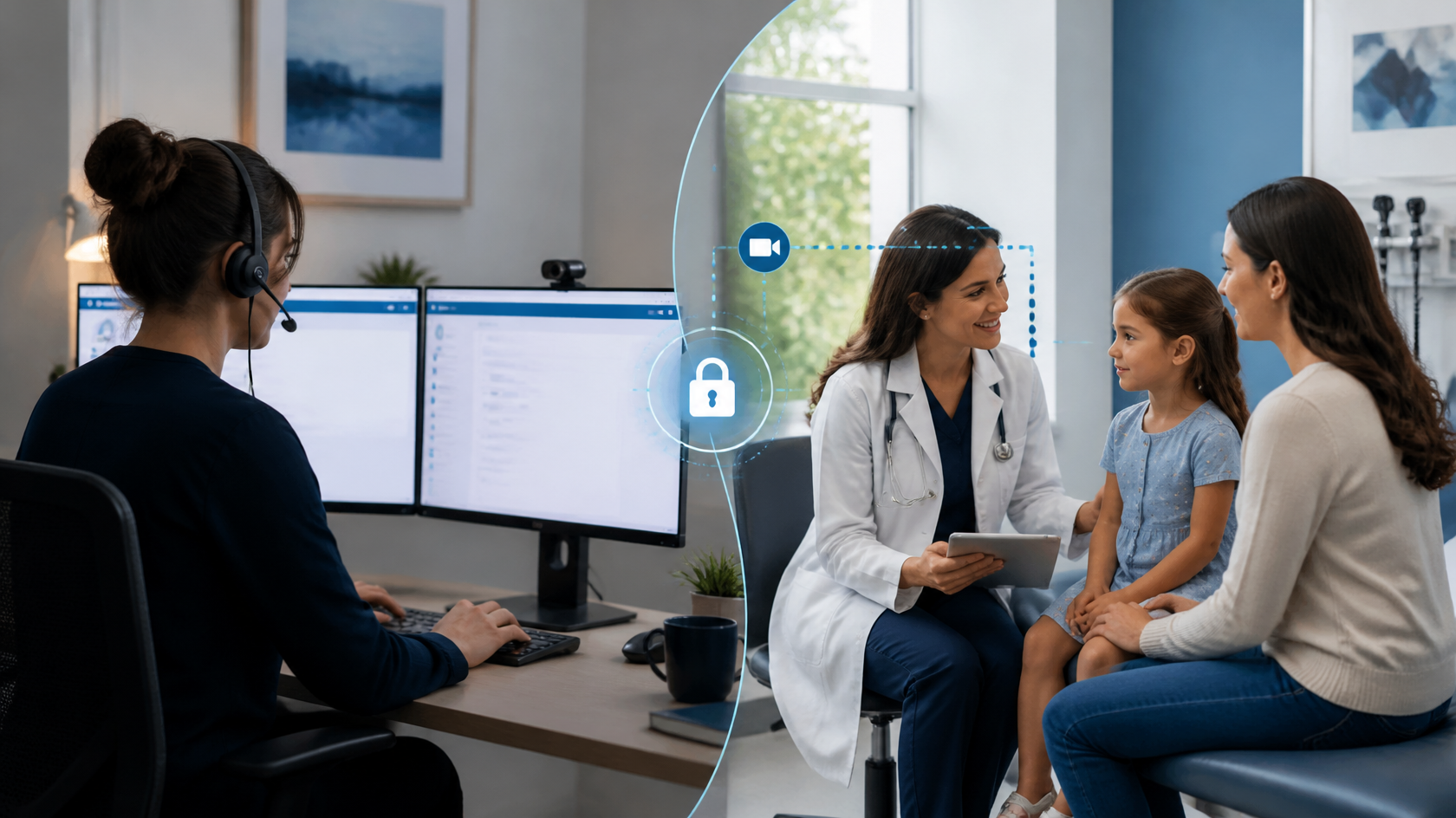
Documentation Risks Pediatric Practices Should Not Overlook
Virtual scribing can support clinical documentation, but practices still need clear processes to maintain accurate and appropriate records.
Several areas deserve particular attention.
Incorrect information attribution: Parent-reported observations should not automatically be documented as statements made directly by the child.
Missing developmental context: Relevant age-specific information should be organized according to the encounter and provider’s documentation requirements.
Unsupported clinical statements: A scribe should not add diagnoses, examination findings, or treatment decisions that the physician has not provided.
Incomplete follow-up information: Important instructions and next steps should be documented clearly according to the provider’s direction.
Privacy and access management: Remote documentation arrangements should use appropriate access controls and confidentiality safeguards.
When a virtual scribing service handles protected health information on behalf of a covered healthcare provider, applicable HIPAA business associate requirements must be evaluated. Practices should review relevant agreements, safeguards, access procedures, and vendor responsibilities.
Official guidance: HHS HIPAA Guidance on Cloud Computing.

Choosing a Scribing Workflow That Fits Pediatric Care
Not every documentation workflow is suitable for every specialty. Pediatric practices should evaluate whether a virtual medical scribe service can accommodate the specific needs of their providers and patient population.
Consider the following when evaluating a service:
- Pediatric documentation familiarity: Understanding common pediatric terminology and encounter types.
- Caregiver communication: Maintaining clear attribution of parent, guardian, and child statements.
- EHR workflow compatibility: Working within the practice’s existing documentation templates and procedures.
- Accuracy and completeness: Organizing information without introducing unsupported clinical details.
- Privacy procedures: Reviewing access controls, confidentiality practices, and applicable agreements.
- Provider oversight: Ensuring that physicians retain responsibility for reviewing and approving medical records.
Pediatric practices should also clarify onboarding, communication procedures, coverage arrangements, and escalation processes before implementation.

Human Virtual Scribes and AI-Assisted Documentation: Understanding the Difference
Healthcare practices increasingly encounter different approaches to medical documentation.
A virtual human medical scribe provides remote documentation assistance through an assigned workflow. AI-assisted medical scribing software, on the other hand, uses technology to process clinical conversations and generate draft documentation.
These approaches are not interchangeable.
Human virtual scribing may involve direct documentation support and workflow coordination, while AI-assisted solutions may offer automated transcription, note generation, or other documentation features depending on the platform.
Practices evaluating either option should consider:
- The complexity of pediatric encounters.
- Multiple-speaker communication requirements.
- EHR compatibility.
- Documentation review procedures.
- Data handling and privacy safeguards.
- Provider preferences and operational requirements.
For additional context on AI-assisted documentation and EHR integration, see AI Medical Scribe EHR Integration.
Supporting Pediatric Documentation With Chase Clinical Documentation
From preventive appointments to acute consultations and follow-up visits, pediatric practices manage documentation that reflects different stages of childhood and family involvement.
A structured documentation workflow can help organize patient histories, caregiver observations, physician findings, and follow-up information into clear medical records.
Chase Clinical Documentation provides virtual medical scribe services for healthcare practices across multiple specialties, including pediatrics.
If your practice is considering additional documentation support, explore Chase Clinical Documentation’s Virtual Medical Scribe Services to discuss your workflow and documentation requirements.
Better-organized documentation starts with a workflow that fits the way your pediatric practice operates.
Clinical notes must be reviewed and authenticated by the responsible healthcare provider. This article is for informational purposes and does not constitute medical, legal, or regulatory advice.
Frequently Asked Questions
What does a virtual medical scribe do for pediatricians?
A virtual medical scribe assists pediatricians with preparing structured clinical notes by organizing patient histories, caregiver-reported information, physician findings, assessments, and follow-up plans for provider review.
Can a virtual medical scribe support well-child visits?
Yes. A virtual medical scribe can help organize documentation relating to growth, developmental history, nutrition, preventive screening discussions, caregiver concerns, and physician-directed follow-up.
How are parent and caregiver statements documented in pediatric records?
Parent and caregiver statements should be attributed to the person providing the information. The medical record should distinguish caregiver observations from the child's direct statements and the physician's clinical findings.
Can pediatric medical scribes assist with sick visits and follow-ups?
Yes. Documentation support may include symptom histories, relevant medical information, treatment responses, medication updates, examination findings, and physician-directed follow-up plans.
Do virtual medical scribes make clinical decisions?
No. Virtual medical scribes provide documentation assistance. They do not independently diagnose patients, prescribe medications, or replace the treating physician's clinical judgment.
What should pediatric practices check before hiring a virtual medical scribe?
Pediatric practices should assess the scribe's experience with pediatric terminology and documentation workflows, EHR compatibility, HIPAA-related privacy and security procedures, availability, and communication processes. Practices should also establish clear documentation responsibilities and ensure physicians review and authenticate notes before finalization.
Recent Posts