Why Physicians Finish Charting After Hours — and How Virtual Medical Scribes Help

Notes pile up between appointments and spill into the evening. Here is how the backlog forms, and how live scribe support moves note drafting into the visit.
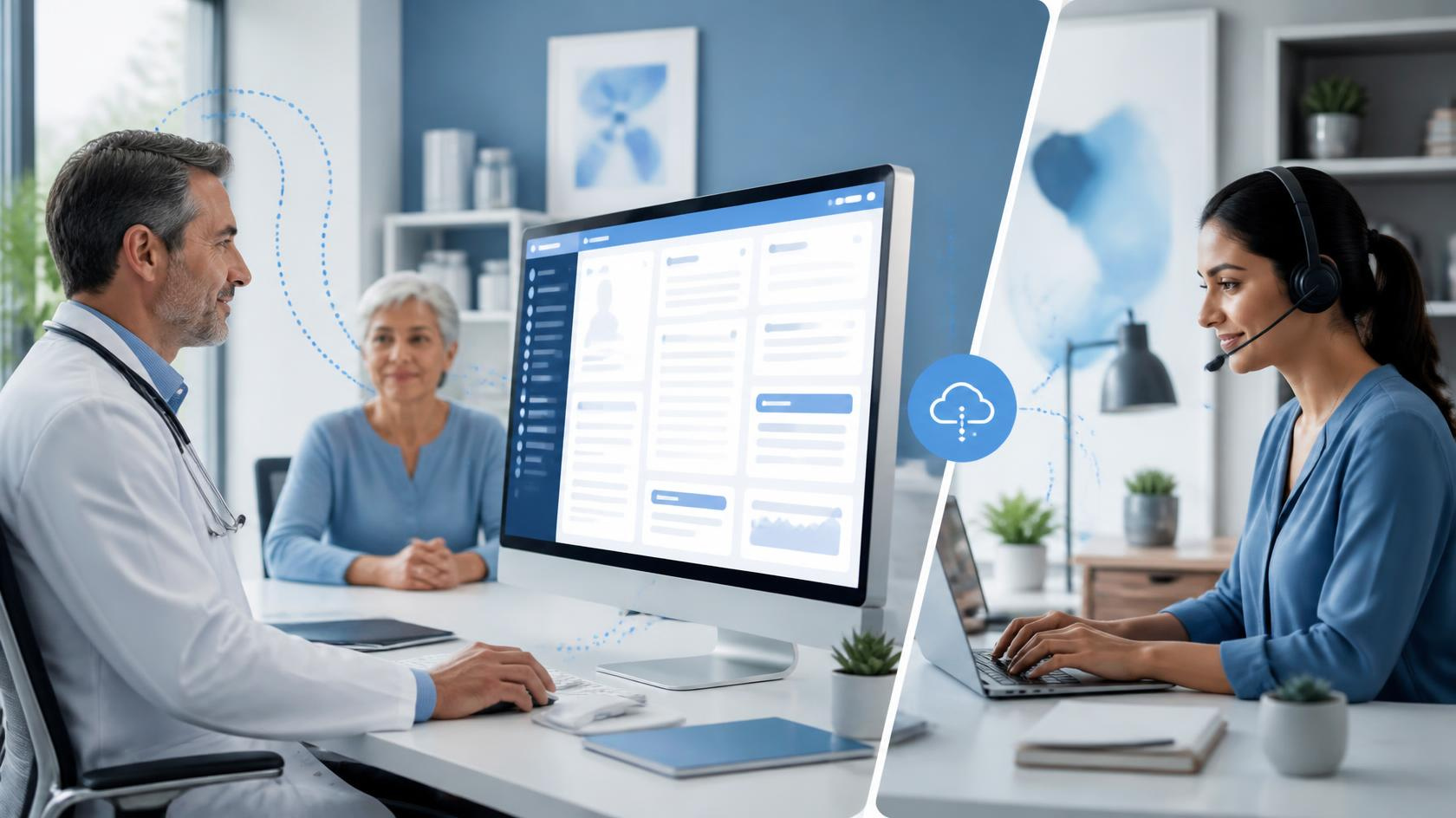
A virtual medical scribe can help by preparing clinical documentation during live patient encounters, allowing physicians to review and finalize notes closer to the time of care. For U.S. medical practices, the goal is not to remove physicians from documentation oversight. It is to reduce the amount of note drafting left for them to complete after the last patient has gone home.
This article explains the workflow behind after-hours documentation accumulation, what physicians must still review, correct, and sign and how
Chase Clinical Documentation’s live virtual scribe service
supports same-day chart completion.
Why Do Physicians Finish
Charting After Clinic Hours?
Research published in JAMA Internal Medicine using data from the 2019 National Electronic Health Records Survey found that U.S. office-based physicians spent an average of 1.77 hours per day completing documentation outside office hours. Among physicians who used EHRs, the reported average was 1.84 hours per day.
According to AMA research on physician time allocation in ambulatory practice, EHR and administrative tasks represent a significant portion of daily physician workload often competing directly with time available for clinical documentation.
Several circumstances contribute to unfinished notes:
- Back-to-back appointments: Physicians have limited time to complete one note before the next patient arrives.
- Interrupted documentation: Phone calls, urgent patient needs, and staff questions disrupt note preparation mid-encounter.
- Complex encounters: Detailed histories, assessments, and treatment plans require careful documentation that cannot be rushed.
- Delayed note drafting: Some physicians postpone writing until several encounters have finished, increasing reconstruction time.
- End-of-day responsibilities: Results review, referrals, orders, and clinical tasks compete with remaining documentation time.
The result is a documentation workload that consistently extends beyond scheduled clinic hours.
For related context on how documentation workflows create inefficiency throughout the day, see
5 Documentation Workflows That Waste 30+ Minutes Daily on the Chase blog.

How Does Unfinished Documentation Accumulate During a Clinic Day?
The end-of-day documentation backlog usually develops gradually. Consider a primary care physician with a full schedule the first encounter leaves a partially completed note, the second adds another task, and by midday, several charts may require additional attention.
Importantly, the number of unfinished notes does not tell the whole story. Each chart may require different levels of review, correction, and physician time to finalize. A progress note left at the history-and-physical stage requires more reconstruction than one with a completed assessment awaiting sign-off.
Practice managers should therefore monitor both the number of pending notes and the physician time required to finalize them not just one measure in isolation.
The
EzyScribe team explains how documentation backlogs affect practice efficiency in How Virtual Scribes Reduce Physician Burnout a useful companion resource for practice owners evaluating documentation support options.

How Can a Virtual Medical Scribe
Help During Live Patient Encounters?
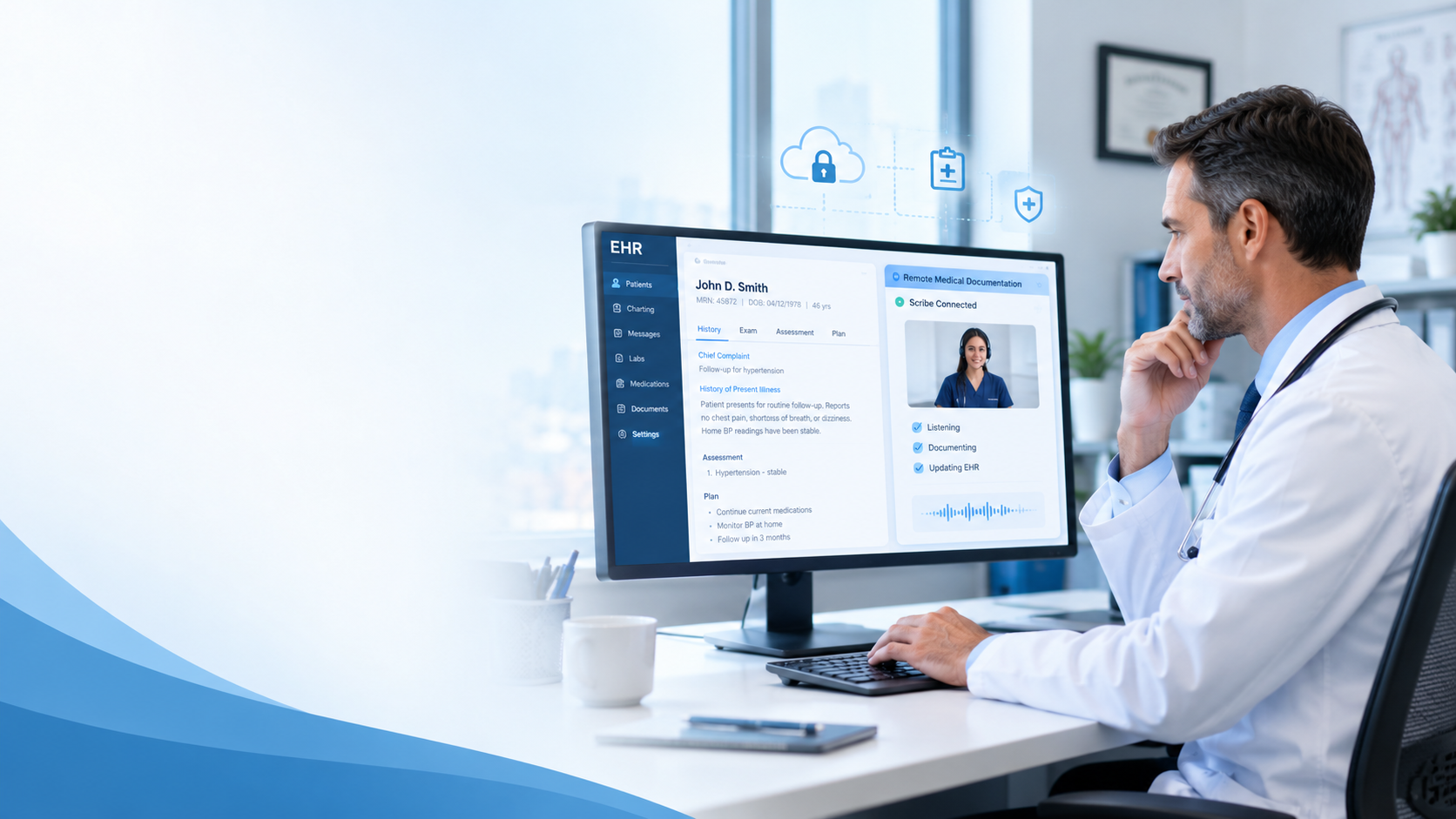
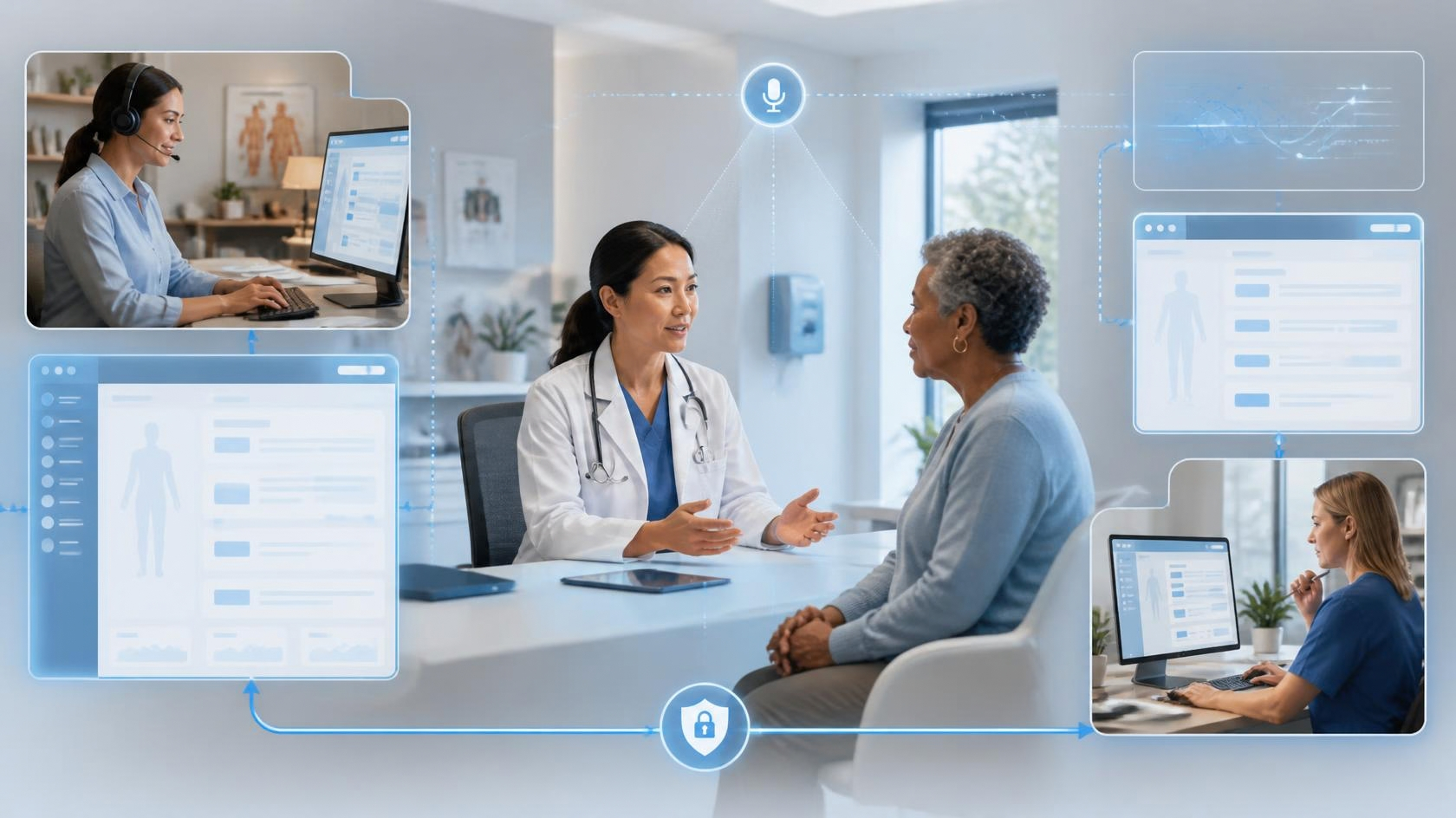
A virtual medical scribe supports the physician by documenting the encounter as it happens, following the practice’s established documentation process. Instead of waiting until the consultation ends to construct the entire note, the scribe organizes relevant clinical information in real time.
A typical virtual medical scribe workflow includes:
- Before the appointment: The scribe reviews approved patient information and prepares the relevant documentation template according to practice instructions.
- During the encounter: The physician conducts the consultation while the scribe captures relevant clinical information in the EHR or documentation platform.
- Note preparation: The scribe organizes the information into the physician’s preferred documentation structure typically a SOAP note (Subjective, Objective, Assessment, Plan).
- After the encounter: The draft is made available for the physician to review, often before the next patient begins.
- Physician approval: The physician verifies the information, makes necessary corrections, and completes the required sign-off.
This approach can meaningfully reduce the amount of manual note drafting that physicians need to perform between appointments which is where much of the after-hours backlog originates.
The exact workflow depends on the EHR system, access permissions, specialty requirements, and the responsibilities agreed upon between the practice and the scribe provider.
For guidance on preparing for a virtual scribe session, see Virtual Medical Scribe Pre-Charting: What to Prepare Before a Patient Visit a step-by-step resource for onboarding physicians.
How Does Scribe Support Help
Reduce the End-of-Day Documentation Backlog?
The main benefit of live documentation support is that note preparation happens closer to the patient encounter. When documentation is prepared in real time, fewer notes are waiting entirely unwritten when the clinic closes.
The second workflow does not guarantee that every chart will be signed immediately. Physicians may still need to address complex cases, review test results, approve orders, and complete other clinical responsibilities. However, moving note preparation into the live encounter can significantly reduce the amount of documentation left entirely unwritten at the end of the day.
This shift from drafting to reviewing is the core productivity improvement that virtual medical scribe services are designed to deliver.
For a broader view of how AI-assisted and live scribes compare on time savings throughout the workday, see How AI Medical Scribes Save Doctors Time Throughout the Workday on the Chase blog.
EzyScribe’s service model for reducing documentation burden is outlined at
ezyscribe.com.

What Does the Physician Still
Need to Review, Correct, and Sign?
A virtual medical scribe assists with documentation preparation. The scribe does not replace the physician’s clinical judgment or final responsibility for the accuracy of the medical record. The physician must continue to verify that the documentation accurately reflects the encounter.
This is a compliance requirement, not just a workflow preference.
CMS guidance on physician signature requirements
explains that when a scribe documents a physician’s medical record entry, the treating physician’s signature authenticates both the documentation and the care provided or ordered.
| Documentation Responsibility | Virtual Medical Scribe | Physician |
|---|---|---|
| Capture encounter information | Assists | Provides clinical information |
| Organize patient history | Assists per instructions | Verifies clinical relevance |
| Prepare draft progress notes | Yes | Reviews |
| Document examination findings | Records physician-provided findings | Verifies accuracy |
| Determine diagnosis | No | Yes |
| Establish treatment plan | No | Yes |
| Authorize clinical orders | No (unless separately authorized) | Reviews and authorizes |
| Correct clinical inaccuracies | Flags unclear information; makes requested edits | Verifies and directs corrections |
| Final note approval and signature | No | Yes |
The distinction is important: faster note preparation should never come at the expense of documentation accuracy or clinical oversight.
Practices involving protected health information (PHI) should also review HHS HIPAA Business Associate Agreement requirements when engaging any documentation support vendor. Using a virtual scribe does not automatically make a practice HIPAA compliant appropriate agreements and safeguards must be in place.
For more on the physician’s role in a team documentation model, see
Team Documentation Model: How Virtual Scribes Fit Into AMA’s 6-Step Efficiency Framework.

Before and After:
A Practical Clinic-Day Workflow
Consider a hypothetical primary care practice with a physician seeing 20 patients during a scheduled clinic day. The following example illustrates how documentation responsibilities may shift when live virtual scribe support is introduced. This is not a measured Chase client result it is a workflow illustration.
| Workflow Stage | Without a Virtual Scribe | With Live Scribe Support |
|---|---|---|
| First appointment | Physician conducts visit and drafts note | Scribe prepares the note during the visit |
| Between appointments | Physician completes or postpones documentation | Physician reviews the prepared draft as workflow allows |
| Midday | Earlier unfinished notes may remain open | More encounters have documentation drafts ready for review |
| Afternoon | New notes add to outstanding work | Scribe continues documenting live encounters |
| End of clinic | Physician may have several notes awaiting drafting | Physician focuses on outstanding reviews, corrections, and sign-offs |
| After clinic | Remaining note preparation and signing continue | Remaining clinical and documentation tasks completed as needed |
The important difference is not that the physician stops working on medical records. It is that the physician can spend less of the day constructing notes from scratch and more time reviewing documentation that was prepared during the encounter.
This change from primary author to reviewer is achievable for most clinical specialties. Pediatrics, internal medicine, family medicine, and urgent care practices have all applied this model effectively.
For specialty-specific guidance on virtual medical scribe implementation, contact the Chase Clinical Documentation team directly.

How Should Medical Practices Measure
Improvements in After-Hours Charting?
Practices should establish a documentation baseline before introducing a virtual medical scribe. Without a baseline, it is difficult to attribute changes to the new workflow rather than seasonal volume shifts or staffing changes.
These measures help practice owners determine whether the documentation workflow is improving without compromising clinical oversight.
For a structured approach to evaluating scribe performance, see
How to Measure Virtual Medical Scribe Performance: 8 KPIs
a detailed metrics guide for practice managers.
How Chase Clinical Documentation Supports Physicians
Chase Clinical Documentation provides virtual medical scribe services designed to support U.S. physicians and medical practices with real-time clinical documentation.
Its virtual medical scribe service supports documentation during patient encounters using the practice’s established EHR processes and physician-specific documentation preferences. A dedicated scribe assists with organizing encounter information and preparing clinical notes — while the physician retains responsibility for clinical decisions, verification, corrections, and final sign-off.
What Chase Clinical Documentation offers:
- Live virtual scribe support during patient consultations
- Physician-specific documentation templates and EHR workflow integration
- HIPAA-compliant service structure with appropriate business associate agreements
- Dedicated scribe assignment for consistency across the clinical day
- Onboarding support for new practices and specialty-specific workflows
For practices experiencing a growing documentation backlog, the first step is to understand where unfinished notes accumulate and determine whether live documentation support fits the existing clinical workflow.
Ready to explore a documentation workflow that works? Visit Chase Clinical Documentation’s Virtual Medical Scribe Services to learn more or schedule a consultation.
Explore Virtual Medical Scribe Services
Conclusion
After-hours charting is often the result of documentation work accumulating throughout a busy clinic day. When physicians must prepare every note manually between appointments or after consultations end, unfinished records become an ongoing workload that extends well beyond scheduled hours.
A live virtual medical scribe can help change this workflow by preparing documentation during patient encounters and making notes available for physician review closer to the time of care shifting the physician’s role from primary note author to reviewer and approver.
For U.S. medical practices looking to reduce unfinished charting, improve documentation turnaround, and support their physicians’ daily workflow, Chase Clinical Documentation offers virtual medical scribe services built around real-time clinical documentation.
Frequently Asked Questions
Why do physicians finish charting after hours?
Physicians often finish charting after hours because patient appointments, clinical responsibilities, interruptions, and limited documentation time between encounters prevent them from completing every note during the scheduled clinic day. Research from JAMA Internal Medicine found U.S. office-based physicians averaged 1.77 hours of documentation outside office hours daily.
Can a virtual medical scribe help reduce after-hours charting?
Yes. A virtual medical scribe can prepare clinical notes during live patient encounters, reducing the amount of manual note drafting left for physicians after clinic hours. Results depend on encounter volume, documentation complexity, physician review time, and workflow design. See Chase's virtual medical scribe services.
Does a virtual medical scribe document during patient visits?
A live virtual medical scribe can document relevant encounter information as the consultation takes place, following the physician’s instructions, practice protocols, and approved EHR access permissions.
Do physicians still need to review and sign notes prepared by a scribe?
Yes. Physicians must verify that the note accurately reflects the encounter, correct any inaccuracies, and complete the required authentication and sign-off. CMS guidance requires the treating physician’s signature to authenticate scribe-prepared documentation.
Can a virtual medical scribe help clinics complete notes on the same day?
A live documentation workflow can help practices prepare notes closer to the encounter and support same-day completion goals. Actual results depend on the physician’s review process, clinic volume, and the agreed documentation workflow.
Is a virtual medical scribe suitable for small medical practices?
A virtual medical scribe may be suitable for small practices experiencing recurring documentation backlogs, particularly when physicians have limited time between appointments. The practice should evaluate encounter volume, EHR compatibility, coverage requirements, and expected documentation responsibilities before implementation.
What is the difference between a live virtual medical scribe and an AI scribe?
A live virtual medical scribe is a trained human scribe who documents during the encounter in real time, responding to clinical context and physician preferences dynamically. An AI scribe uses automated transcription and note generation tools. Some practices use both — AI for draft generation and a human scribe or physician for review. For more information, see Why Isn’t My AI Medical Scribe Saving Me Time?
Recent Posts