How Virtual Medical Scribes
Adapt to Different EHR Workflows
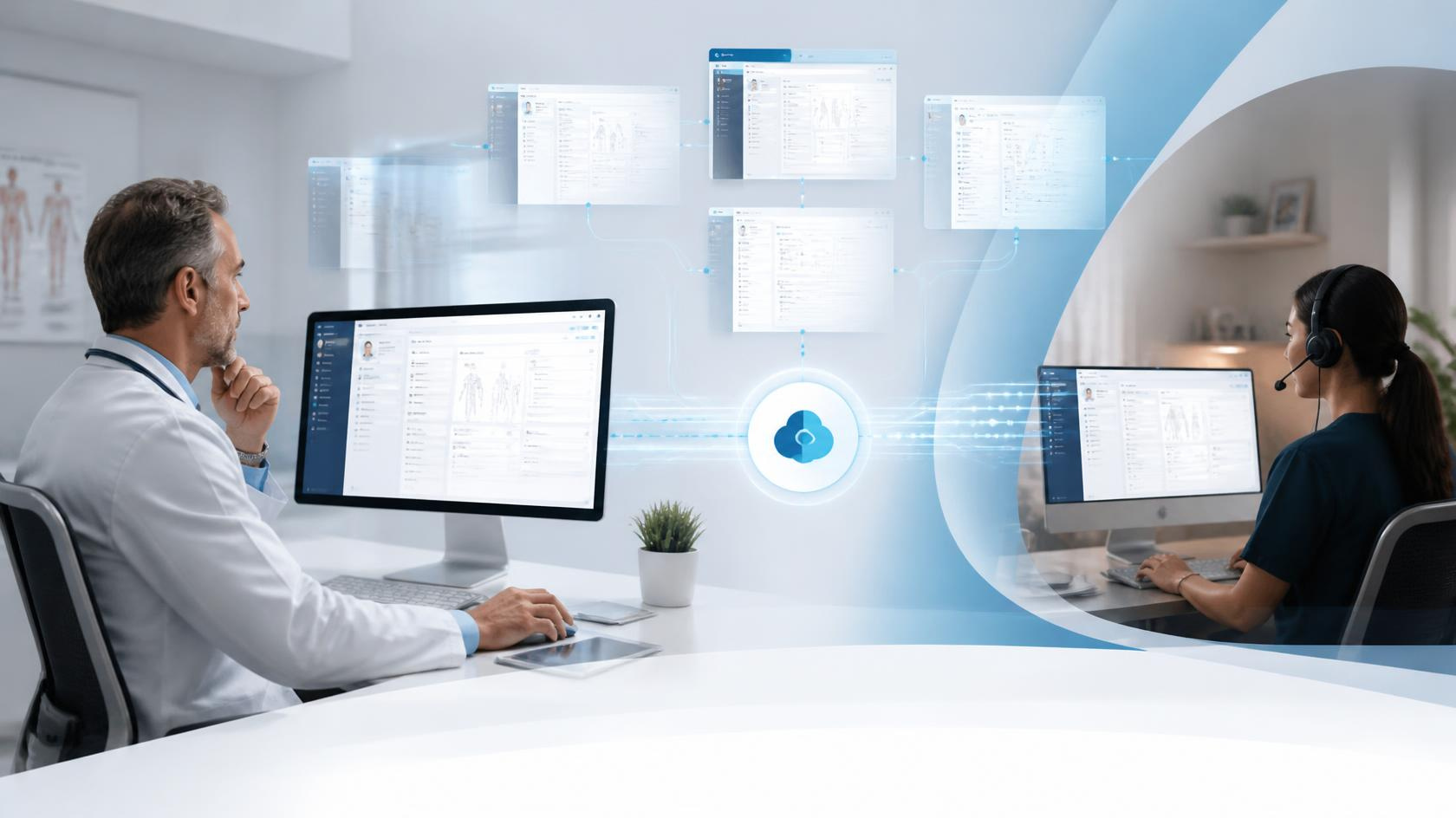
Consider two internists at the same multispecialty practice. They use the same EHR, see patients in adjacent exam rooms, and share the same IT infrastructure. Yet one dictates verbally and prefers dense narrative notes with extensive social history, while the other documents in structured fields, keeps assessments brief, and wants labs and medications updated before the encounter closes. Same system. Completely different workflow.
This is the reality
virtual medical scribes navigate every day and it's why EHR workflow adaptation is a more meaningful measure of scribe performance than software access alone.
The EHR Is the Same. The Workflow Often Isn't.
When a practice evaluates virtual medical scribe services, the first question is usually about EHR compatibility: Does the scribe work with Epic? Can they access Athenahealth? What about eClinicalWorks or Cerner?
These are reasonable questions, but they address system access, not workflow fit.
System compatibility means the scribe can log into or observe the EHR. Workflow compatibility means the scribe understands how that specific practice, and that specific physician, actually uses it. The distinction matters because EHR platforms are configurable. Templates, field structures, chart organization, and documentation sequences vary significantly between practices sometimes between providers within the same practice.
A scribe who can access an EHR but doesn't understand how the provider documents care will produce notes that require heavy editing before sign-off, defeating the purpose of the service.
What a Virtual Medical
Scribe Actually Has to Learn
Can a virtual medical scribe adapt to my EHR workflow?
Yes. A trained virtual medical scribe adapts to your existing EHR workflow by learning your chart structure, provider-specific note preferences, documentation templates, specialty terminology, and review process — rather than applying a generic documentation pattern across all providers.
The learning process involves more than software orientation. A virtual scribe working in a cardiology practice needs to understand how that practice organizes stress test results, what belongs in the assessment versus the plan, and how the physician sequences documentation during or after a visit. In a psychiatry setting, the documentation priorities shift entirely mental status examinations, medication management notes, and session summaries have distinct structural requirements that differ from a primary care SOAP note.
Practical adaptation also includes understanding:
Template structure — which fields are required, which are free-text, and how the practice has customized default templates
Documentation sequence — whether the provider documents during the encounter, immediately after, or in batches at end of day
Preferred level of detail — some physicians want comprehensive notes; others prefer lean, problem-focused documentation
Chart navigation habits — how the provider moves through the chart and where they expect information to appear
Review and sign-off preferences — whether the physician reviews addendum-style or edits inline before attestation
These preferences are often learned through direct observation, sample note review, and iterative feedback during onboarding not from reading a software manual.
How Documentation Workflow
Changes Across Practice Settings
Can a virtual medical scribe support different specialties?
Virtual medical scribes can support multiple specialties by adjusting their documentation approach to match the clinical focus, encounter patterns, and charting requirements specific to each specialty.
The workflow differences are substantive, not cosmetic:
High-volume primary care often involves rapid encounter turnover and a broad scope of documentation acute complaints, chronic disease management, preventive screenings, patient education notes, and referral coordination. The scribe's role here centers on speed and consistency across high note volume.
Orthopedics documentation frequently involves detailed functional assessments, range-of-motion findings, imaging interpretation summaries, and procedure notes. Templated structures are common, but post-surgical follow-up documentation requires different field handling than a new injury evaluation.
Psychiatry requires careful documentation of subjective patient reporting, mental status findings, risk assessments, and medication adjustments with particular attention to language precision, since these notes carry significant legal and clinical weight. A psychiatric documentation workflow looks nothing like a cardiology encounter note.
Pediatrics introduces age-specific developmental milestones, weight-based calculations, immunization documentation, and caregiver communication notes that don't appear in adult medicine workflows.
The scribe's value in each setting depends on understanding those distinctions not just switching between EHR logins.
What Happens
During Onboarding?
How does a virtual medical scribe learn a physician's EHR preferences?
Onboarding typically includes EHR orientation, review of provider-specific documentation templates, analysis of sample notes, and direct instruction on documentation priorities. The process is followed by supervised encounters and ongoing quality review to refine accuracy and workflow alignment.
At providers like Chase Clinical Documentation, onboarding involves configuring the scribe's workflow to match the specific practice environment before live encounters begin. This includes reviewing existing notes to understand the provider's natural documentation style, identifying template structures, and establishing clear sign-off protocols.
Onboarding isn't a one-time event. Practices evolve templates get updated, providers adjust their documentation habits, and new encounter types are added. A
virtual medical scribe service that builds in ongoing quality review adapts over time rather than locking into an initial configuration.
When Multiple Providers
Use the EHR Differently
Organizations with several physicians face a layered challenge: maintaining documentation consistency across the practice while allowing each provider to document in their natural style.
This requires the scribe team to maintain provider-specific workflow profiles documented preferences, template variations, and documentation sequences while applying consistent standards for note structure, clinical terminology, and chart completeness. The goal is not uniformity of style but uniformity of quality.
For practices using
real-time EHR documentation support, this means a scribe assigned to Dr. A follows Dr. A's templates and preferences, while a scribe supporting Dr. B follows a different set both producing complete, reviewable notes that meet the same documentation standards.
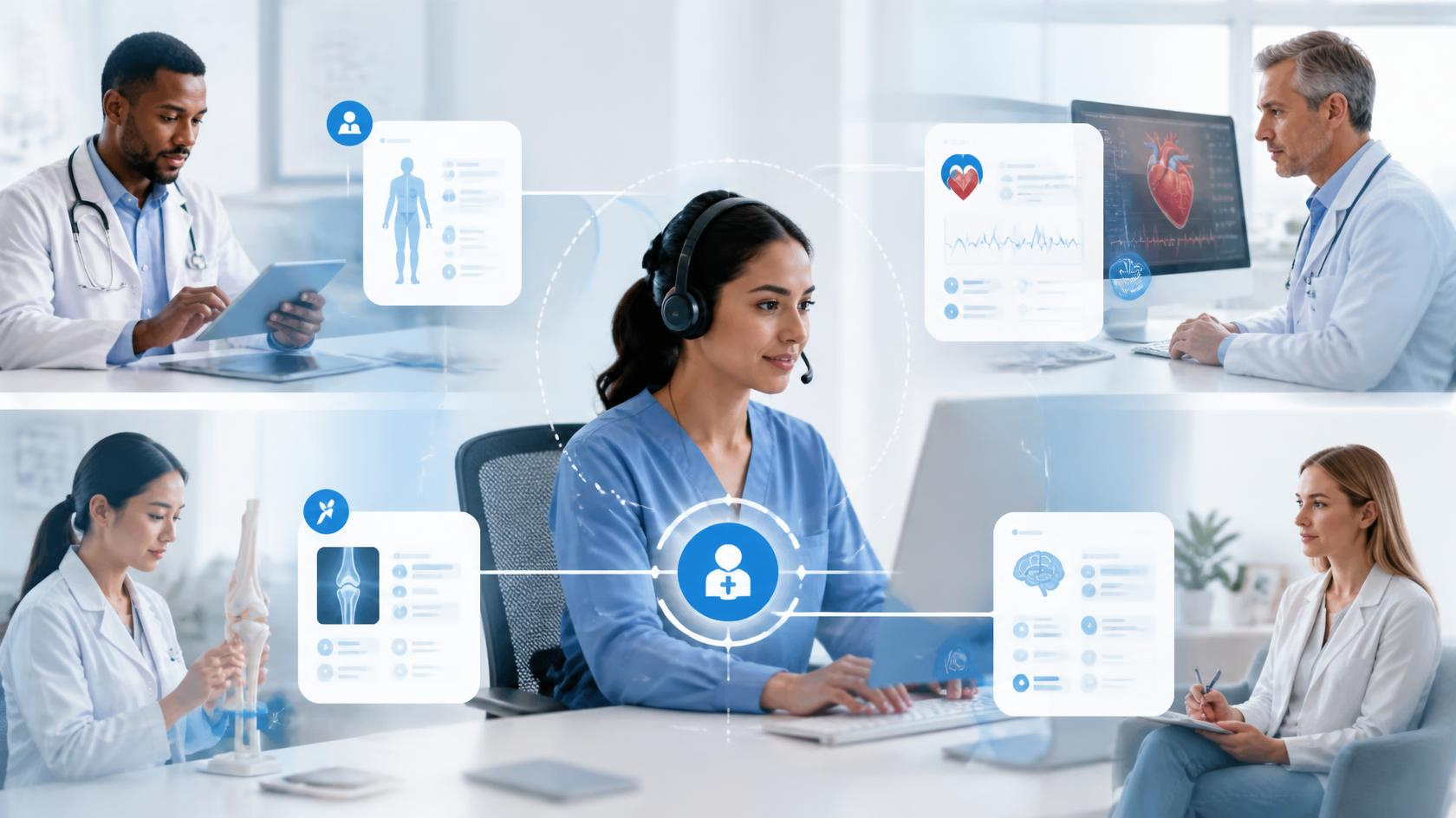
Workflow Fit Is the
Measure That Actually Matters
A virtual medical scribe who disrupts how a physician already works creates friction instead of removing it. The documentation process should feel like a natural extension of the provider's clinical routine not a new system imposed on top of it.
Practices evaluating virtual medical scribe services should ask not only whether a scribe can access their EHR, but whether the service has a defined process for learning provider-specific workflows, how quickly that adaptation happens, and how ongoing refinement is managed when documentation preferences change.
EHR access is a prerequisite. Workflow fit is what makes a scribe effective.
Chase Clinical Documentation provides
trained virtual medical scribes for U.S. physician practices across specialties, working within existing EHR environments and provider documentation workflows.
FAQ
Does a virtual medical scribe need to completely change how I document visits?
No. The purpose of a well-trained virtual medical scribe is to adapt to how the provider already documents care learning existing templates, note preferences, and chart structure rather than replacing them.
Can a virtual scribe work with our practice's customized EHR templates?
Yes. Customized templates are part of what scribes are trained on during onboarding. Understanding which fields the provider uses, which are auto-populated, and how templates are structured is fundamental to accurate documentation.
What if our physicians all document differently within the same EHR?
Scribe services that maintain provider-specific workflow profiles can support multiple physicians with different documentation styles within the same practice, while still applying consistent quality and completeness standards.
How long does it take for a virtual medical scribe to learn our workflow?
The onboarding timeline depends on practice complexity, specialty, and template configuration. Most workflows are functional within a defined onboarding period, with ongoing refinement as preferences evolve.
IIs a virtual medical scribe the same as an AI medical scribe?
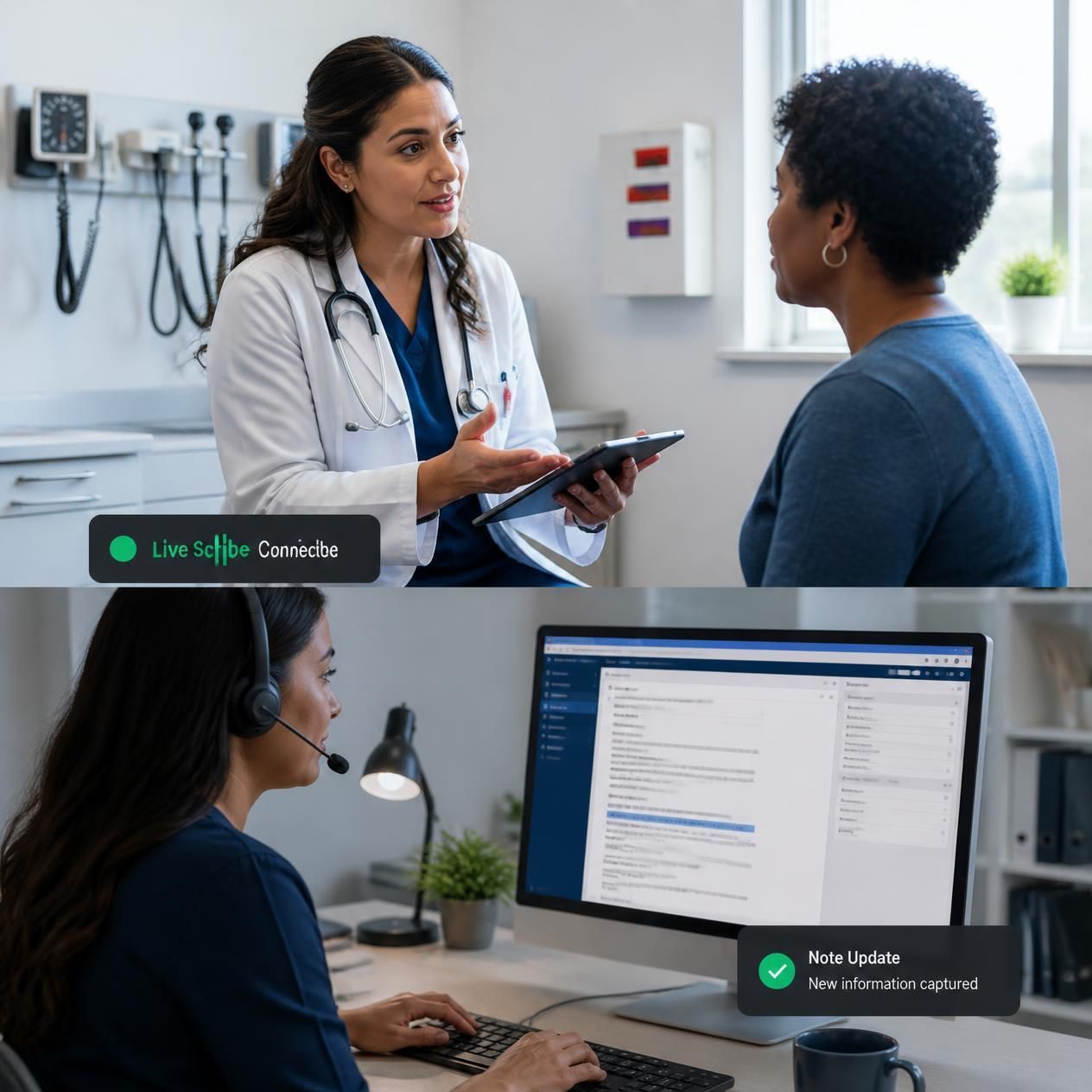
No. A virtual medical scribe is a trained human professional working remotely. AI medical scribes use automated transcription and documentation tools. Some services, including Chase Clinical Documentation's Ezyscribe platform, combine both.
Can virtual scribes handle specialty-specific documentation requirements?
Yes. Scribes working in specialized settings are trained on specialty-specific terminology, note structures, and documentation patterns from psychiatric evaluations to orthopedic procedure notes.
Recent Posts