Introduction
The advent of artificial intelligence (AI) in healthcare has led to significant advancements in the accuracy and efficiency of electronic health records (EHRs). As healthcare providers increasingly rely on EHRs to store and manage patient information, the role of AI in enhancing the accuracy of these records has become more critical than ever. Medical AI tools are revolutionizing the way EHRs are maintained, offering powerful solutions to common challenges such as data entry errors, inconsistencies, and incomplete records. This article explores how AI is enhancing accuracy in EHRs and the impact these improvements have on patient care and healthcare operations.
The Importance of Accuracy in
Electronic Health Records
Accurate electronic health records are essential for providing high-quality patient care. EHRs serve as a comprehensive repository of a patient’s medical history, including diagnoses, treatments, medications, and test results. Healthcare providers rely on the accuracy of this information to make informed decisions about patient care, coordinate treatments, and monitor progress over time.
However, inaccuracies in EHRs can lead to serious consequences, including misdiagnoses, incorrect treatments, and potential harm to patients. Data entry errors, missing information, and inconsistencies between records are common issues that can compromise the quality of care. Ensuring the accuracy of EHRs is therefore a top priority for healthcare providers, and AI offers a promising solution to these challenges.
How AI Enhances
Accuracy in EHRs
AI-powered tools are transforming the way EHRs are managed, offering a range of capabilities that improve the accuracy of medical records. These tools leverage natural language processing (NLP), machine learning algorithms, and predictive analytics to automate data entry, validate information, and identify discrepancies in real-time. Here are some of the key ways AI enhances accuracy in EHRs:
1. Automating Data Entry
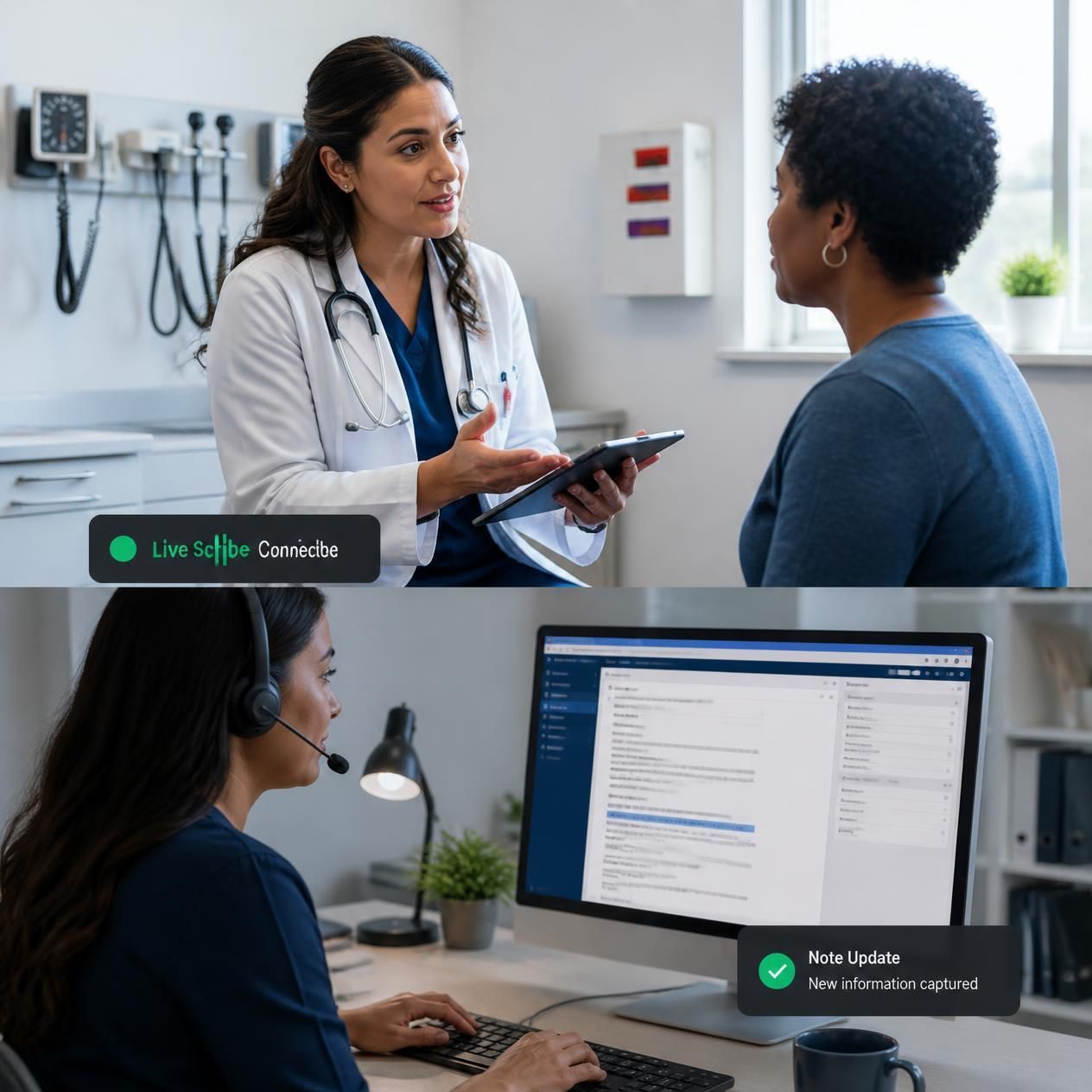
One of the primary benefits of AI in EHR management is its ability to automate data entry. Traditionally, data entry has been a manual process prone to human error, especially in busy healthcare environments where time is limited. AI tools can automatically extract relevant information from patient interactions, lab results, and diagnostic reports, and enter it directly into the EHR. This reduces the likelihood of errors and ensures that information is captured accurately and efficiently.
2. Real-Time Error Detection and Correction
AI tools can continuously monitor EHRs for potential errors or inconsistencies, flagging issues for immediate correction. For example, if a patient’s medication history contains conflicting information or if a dosage is entered incorrectly, AI can alert healthcare providers to the discrepancy. This real-time error detection allows for prompt corrections, minimizing the risk of errors impacting patient care.
3. Enhancing Data Consistency
Consistency is key to maintaining accurate EHRs, particularly when multiple healthcare providers are involved in a patient’s care. AI tools help ensure that data is consistent across all records by standardizing terminology, formats, and coding practices. For instance, AI can automatically convert medical terms into standardized codes used in billing and documentation, reducing the risk of misinterpretation or data mismatches.
4. Improving Documentation Completeness
Incomplete records are a common issue in EHRs, often resulting from time constraints or oversight. AI can assist healthcare providers by automatically identifying missing information and prompting for its inclusion. For example, if a diagnosis is recorded without the corresponding treatment plan, AI can flag the omission and suggest the necessary additions. This ensures that records are comprehensive and that all relevant information is documented.
5. Predictive Analytics for Data Validation
AI tools can also enhance accuracy in EHRs by using predictive analytics to validate data and identify potential issues before they arise. For example, AI can analyze a patient’s medical history and current symptoms to predict potential complications or the likelihood of certain conditions. If the information in the EHR doesn’t align with these predictions, AI can prompt further investigation or adjustments, ensuring that the record reflects the most accurate and up-to-date information.
The Impact of AI-Enhanced
EHRs on Patient Care
The improvements in EHR accuracy brought about by AI have a direct and positive impact on patient care. Here are some of the ways AI-enhanced EHRs benefit both patients and healthcare providers:
1. Improved Clinical Decision-Making
Accurate and complete EHRs provide healthcare providers with the information they need to make informed decisions about patient care. By reducing errors and ensuring that all relevant data is available, AI-enhanced EHRs enable more precise diagnoses, better treatment planning, and more effective management of chronic conditions. This leads to improved patient outcomes and a higher standard of care.
2. Enhanced Patient Safety
Patient safety is a top priority in healthcare, and accurate EHRs play a crucial role in preventing errors that could harm patients. AI tools help identify and correct potential issues before they lead to adverse events, such as medication errors or incorrect treatments. By ensuring that EHRs are accurate and up-to-date, AI contributes to a safer healthcare environment for patients.
3. Increased Efficiency and Reduced Workload
AI-enhanced EHRs streamline the documentation process, reducing the time and effort required for data entry and record maintenance. This increased efficiency allows healthcare providers to focus more on patient care and less on administrative tasks, improving overall productivity. Additionally, by automating routine tasks and error correction, AI reduces the workload on healthcare staff, helping to prevent burnout and improve job satisfaction.
4. Better Coordination of Care
Accurate and consistent EHRs are essential for coordinating care among multiple healthcare providers. AI-enhanced EHRs ensure that all providers have access to the same accurate information, facilitating better communication and collaboration. This is particularly important in complex cases where patients see multiple specialists, as it helps ensure that everyone is on the same page and that care is coordinated effectively.
Challenges and
Considerations
While AI offers significant benefits for enhancing accuracy in EHRs, it is not without its challenges. One of the primary concerns is ensuring that AI tools are properly integrated with existing EHR systems and that they are user-friendly for healthcare providers. Additionally, there is a need for ongoing training and support to help providers effectively use AI-enhanced EHRs.
Another consideration is the potential for AI systems to produce false positives, where benign discrepancies are flagged as errors. This can lead to unnecessary interventions and a burden on healthcare providers. Therefore, it is important to strike a balance between automation and human oversight to ensure that AI tools are used effectively and that their outputs are reliable.
Conclusion
Medical AI tools are playing a crucial role in enhancing the accuracy of electronic health records, offering solutions that improve data entry, error detection, consistency, and completeness. These advancements have a direct impact on patient care, leading to better clinical decision-making, improved patient safety, and more efficient healthcare operations. As AI technology continues to evolve, its role in EHR management will likely expand, offering even greater benefits for healthcare providers and patients alike. The integration of AI into EHRs represents a significant step forward in the quest for accuracy and excellence in healthcare documentation.
The AI in itself doesn’t really enhance the accuracy. The tool of
using a virtual scribe to edit and review the AI’s work and then input it directly into the EHR is what enhances the accuracy. So instead of AI tool, it should be the AI + Scribe Edit “tool”.
Recent Posts