Introduction
Medical scribing has long been a vital component of healthcare, serving as a crucial link between physicians and accurate medical documentation. Traditionally, medical scribes have played a hands-on role in capturing and transcribing patient encounters into electronic health records (EHRs). However, with the advent of artificial intelligence (AI), the field of medical scribing is undergoing a significant transformation. AI-powered medical scribing is revolutionizing the way healthcare providers manage documentation, offering greater efficiency, accuracy, and ease. This article explores the evolution of medical scribing from its manual origins to the AI-powered systems that are shaping the future of healthcare documentation.
The Traditional Role of
Medical Scribes
Historically, medical scribes have been essential in helping physicians manage the extensive documentation required in healthcare settings. A medical scribe's primary role is to observe patient encounters and accurately record the details into the patient’s medical record. This documentation includes a variety of information, such as the patient’s medical history, physical examination findings, diagnoses, and treatment plans.
The manual nature of traditional medical scribing meant that scribes needed to be highly skilled in medical terminology, attentive to detail, and capable of keeping pace with fast-moving clinical environments. While this approach helped alleviate the documentation burden on physicians, it was labor-intensive and susceptible to human error. The reliance on human scribes also meant that the documentation process could be inconsistent, with variations in quality depending on the scribe's experience and expertise.
The Introduction of Electronic
Health Records (EHRs)
The shift from paper-based records to electronic health records (EHRs) marked a significant milestone in the evolution of medical scribing. EHRs provided a more organized and accessible way to store patient information, making it easier for healthcare providers to manage and retrieve medical records. This transition also paved the way for more efficient documentation processes, as EHRs enabled faster data entry and retrieval compared to traditional paper records.
However, the introduction of EHRs also presented new challenges. The increased focus on data entry and documentation in EHRs often meant that physicians had less time to interact with patients, leading to concerns about physician burnout and reduced patient satisfaction. Medical scribes continued to play a critical role in this new environment, assisting physicians by entering information into EHRs and ensuring that records were accurate and complete. Yet, the process remained largely manual, requiring significant time and effort from both scribes and physicians.
The Emergence of
AI-Powered Medical Scribing
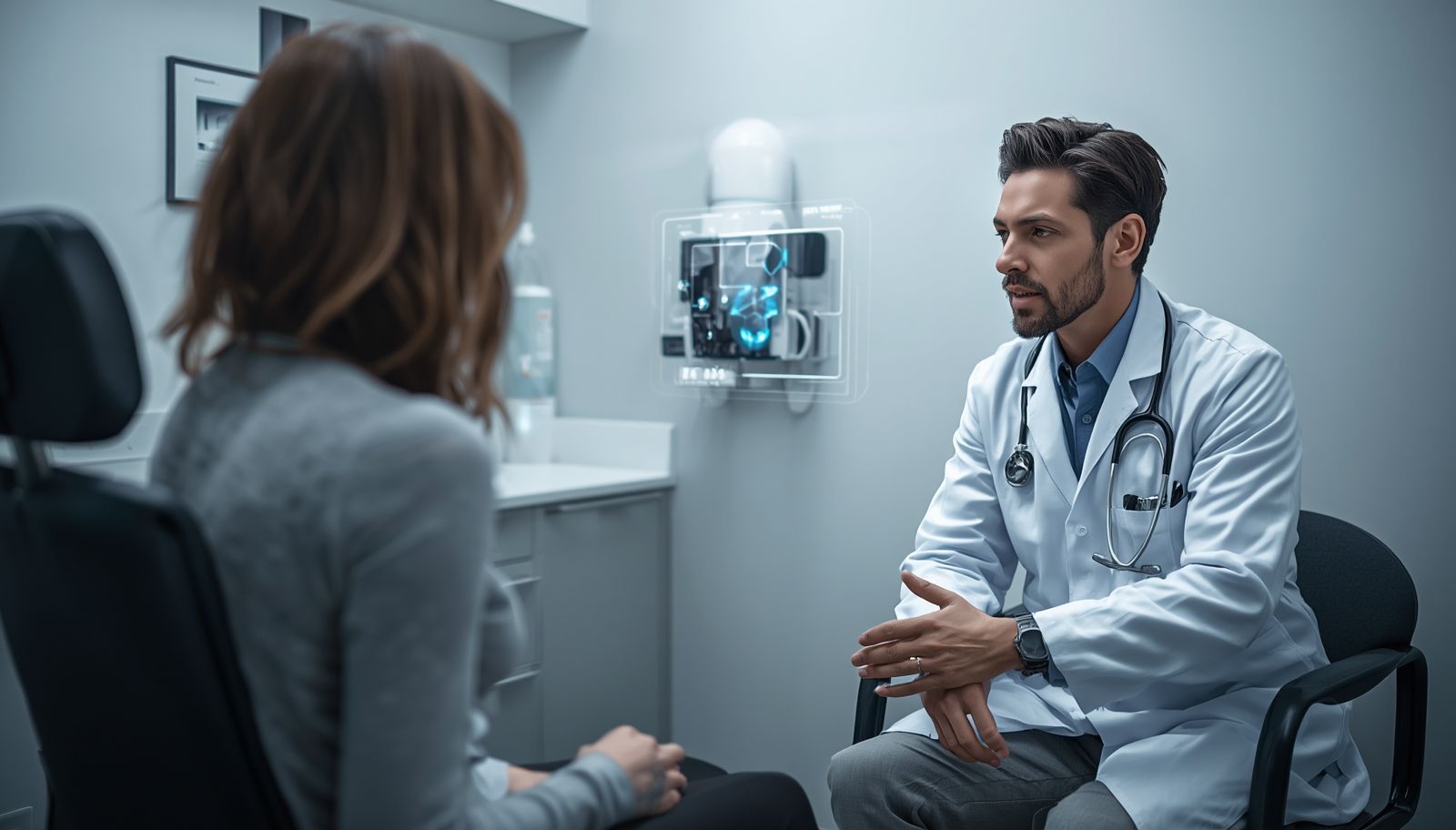
The advent of AI has ushered in a new era of medical scribing, where automation and advanced technologies are transforming the documentation process. AI-powered medical scribing systems utilize natural language processing (NLP) and machine learning algorithms to capture and transcribe patient encounters in real-time. These systems are designed to understand and process spoken language, converting it into structured medical records with minimal human intervention.
AI-powered medical scribing offers several advantages over traditional manual methods. First and foremost, it significantly reduces the time and effort required to document patient encounters. By automating much of the data entry process, AI allows healthcare providers to focus more on patient care and less on administrative tasks. This leads to improved efficiency and a better overall patient experience.
Another key benefit of AI-powered medical scribing is its ability to enhance accuracy and consistency in documentation. AI systems can cross-reference patient data with existing medical records, ensuring that important information is captured and documented correctly. This reduces the risk of errors and helps maintain the integrity of the medical record.
The Impact of
AI on Medical Scribing
The integration of AI into medical scribing has had a profound impact on the field, transforming it from a manual, labor-intensive process to one that is more automated and efficient. AI-powered systems have the potential to significantly reduce physician burnout by alleviating the administrative burden associated with documentation. This allows physicians to spend more time with patients and focus on delivering high-quality care.
Moreover, AI-powered medical scribing systems are continually improving as they learn from the data they process. This means that over time, these systems become more accurate and better at understanding the nuances of medical language and patient interactions. The ability of AI to adapt and learn from experience is a key factor in its growing role in healthcare documentation.
However, the transition to AI-powered medical scribing is not without its challenges. One of the primary concerns is ensuring that AI systems are fully integrated with existing EHRs and other healthcare technologies. This requires careful planning and coordination to ensure that AI systems can seamlessly communicate with other systems and provide accurate, real-time documentation.
The Future of
Medical Scribing
As AI technology continues to advance, the future of medical scribing is likely to see even greater levels of automation and integration. AI-powered systems are expected to become more sophisticated, with the ability to handle increasingly complex documentation tasks. This includes understanding context and nuance in patient-provider interactions, as well as adapting to the specific needs of different medical specialties.
In the future, AI-powered medical scribing systems may also play a role in predictive analytics, helping healthcare providers identify trends and potential risks based on patient data. This could lead to more proactive and personalized care, further enhancing the quality of healthcare delivery.
Despite the growing role of AI, human scribes will continue to play an important role in medical documentation, particularly in cases where human judgment and expertise are required. The collaboration between AI and human scribes represents the future of medical scribing, combining the efficiency of automation with the insights and skills of human professionals.
Conclusion
The evolution of medical scribing from manual methods to AI-powered systems represents a significant advancement in healthcare documentation. AI-powered medical scribing offers numerous benefits, including improved efficiency, accuracy, and reduced physician burnout. As AI technology continues to develop, its role in medical scribing will likely expand,
offering new opportunities for enhancing the quality of care. However, the continued collaboration between AI and human scribes will be essential for ensuring that medical documentation remains accurate, comprehensive, and patient-centered.
Recent Posts