How AI Scribes Handle Multi-Language Patient Encounters: A Complete Guide

Healthcare providers across the United States are serving increasingly diverse patient populations. According to U.S. Census data, millions of patients speak a language other than English at home, making multilingual communication an essential part of modern healthcare. While professional interpreters remain critical for accurate clinical communication, documentation has become more complex as providers navigate conversations involving multiple languages, interpreters, and culturally specific medical terms.
This is where an AI Medical Scribe is transforming clinical documentation. Rather than replacing clinicians or interpreters, AI-powered documentation solutions help capture conversations, organize medical information, and generate structured clinical notes, allowing physicians to focus on patient care instead of extensive paperwork.
In this guide, we'll explore how AI scribes support multi-language patient encounters, the technology behind multilingual documentation, the challenges healthcare organizations face, and the best practices for maintaining accuracy, compliance, and efficiency.
Why Multi-Language Patient Encounters Are Becoming More Common
The U.S. healthcare system serves patients from diverse linguistic and cultural backgrounds. Spanish remains the most commonly spoken language after English, but providers also encounter patients speaking Mandarin, Vietnamese, Arabic, Korean, Tagalog, French, Hindi, Portuguese, Russian, and many other languages.
These encounters often involve:
- Certified medical interpreters
- Family-assisted interpretation (when appropriate)
- Bilingual clinicians
- Remote interpretation services
- Virtual healthcare appointments
Every multilingual interaction generates clinical information that must be accurately documented in the patient's Electronic Health Record (EHR). Missing details or inaccurate documentation can affect diagnosis, treatment planning, billing, continuity of care, and overall patient safety.
How AI Scribes Support
Multi-Language Patient Encounters
Understanding Multiple Speakers
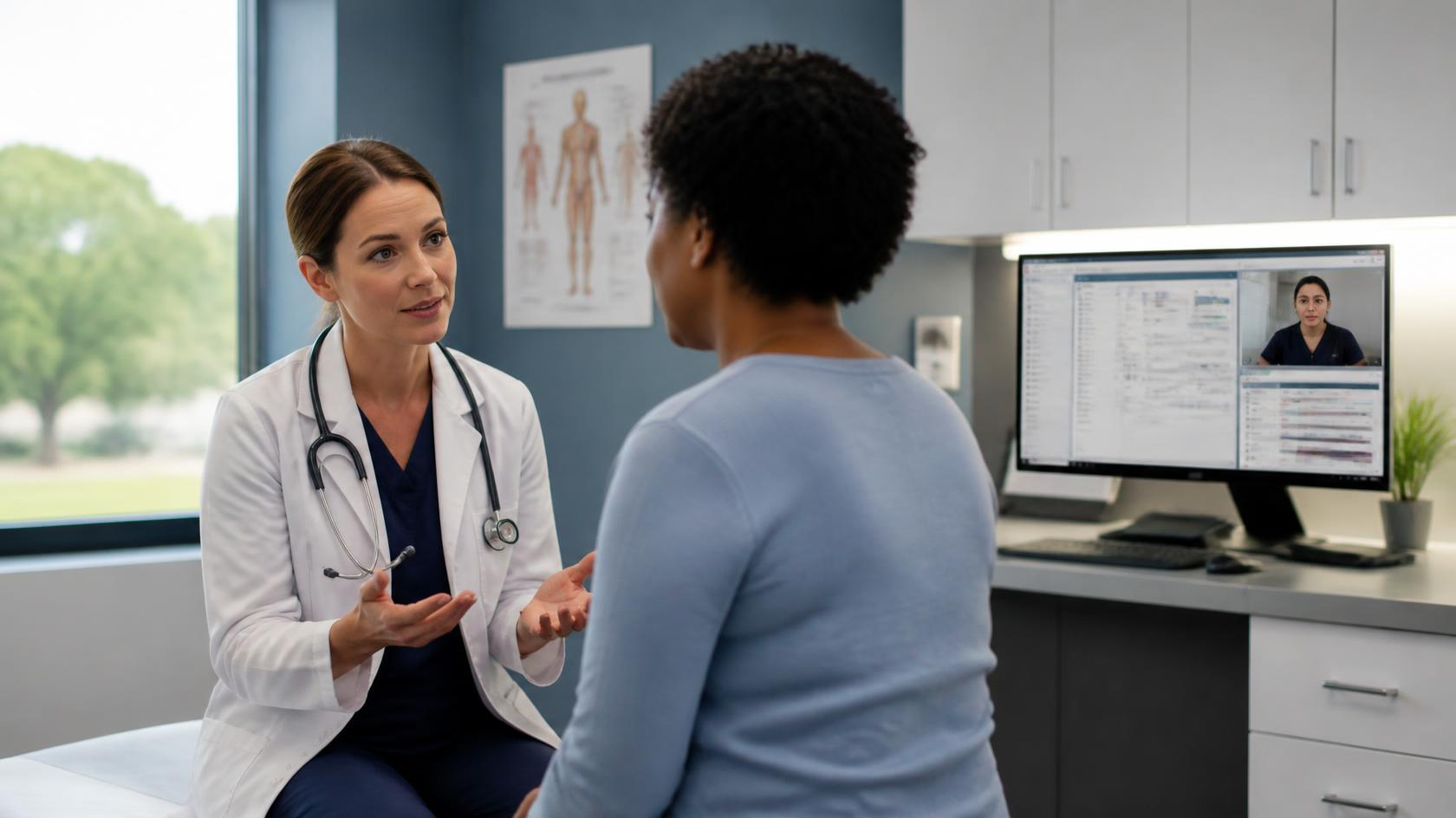
One of the biggest challenges during multilingual visits is identifying who is speaking. A typical encounter may include:
- The physician
- The patient
- A medical interpreter
- A caregiver or family member
Modern AI clinical documentation systems can distinguish between speakers and organize information into meaningful clinical documentation instead of producing an unstructured transcript.
Preserving Clinical Context
Medical conversations often contain symptoms, medications, timelines, allergies, treatment history, and patient concerns. Even when conversations switch between languages, AI documentation platforms are designed to preserve the clinical context so providers receive organized notes instead of fragmented information.
This helps maintain accurate physician documentation while reducing the risk of omitted clinical details.
Supporting Interpreter-Based Visits
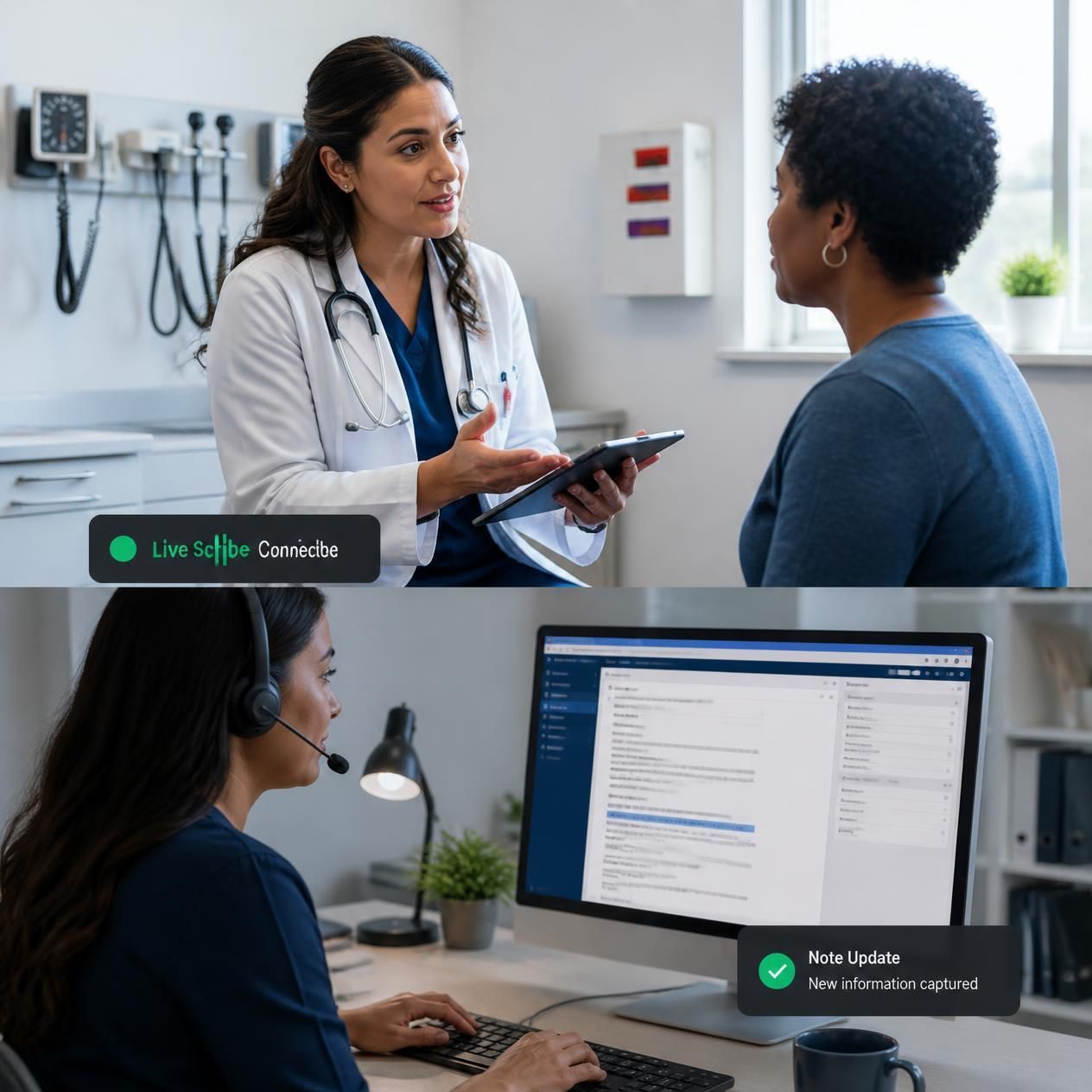
Professional interpreters remain the standard for multilingual healthcare communication. AI scribes complement not replace this process by documenting the clinical encounter after interpretation occurs.
For example, when a provider asks a question in English and the interpreter communicates it in Spanish, the AI documentation workflow focuses on capturing the medically relevant information, helping create concise and organized clinical notes for provider review.
Generating Structured Clinical Notes
Instead of requiring providers to manually summarize every multilingual appointment, AI documentation systems can organize information into familiar clinical formats such as:
- Subjective findings
- Objective observations
- Assessment
- Plan
- Follow-up recommendations
Structured documentation supports consistent EHR documentation while improving provider productivity.
Benefits of AI Clinical Documentation in Multilingual Healthcare
Healthcare organizations are increasingly adopting AI clinical documentation because it helps improve efficiency without compromising provider oversight.
Key benefits include:
- Reduced documentation time
- Improved physician productivity
- More consistent clinical documentation
- Faster completion of patient notes
- Better workflow during busy clinic schedules
- Reduced after-hours charting
- Improved continuity of care
- Enhanced documentation quality
For healthcare providers managing high patient volumes, documentation automation allows more attention to remain on patient interaction rather than administrative tasks.
The Role of AI Medical Documentation in Clinical Workflows
Documentation is no longer limited to typing notes after each appointment. Today's AI-powered workflow supports clinicians throughout the patient encounter.
An AI documentation assistant may help organize:
- History of present illness
- Review of systems
- Physical examination findings
- Medical decision-making
- Diagnoses
- Treatment plans
- Medication updates
- Follow-up instructions
When integrated with clinical workflow software and EHR systems, AI medical documentation helps reduce repetitive administrative work while maintaining provider control over the final record.
Why Human Review
Still Matters
Although artificial intelligence has significantly improved healthcare documentation, human oversight remains essential.
Every AI-generated note should be reviewed by the clinician before finalizing the medical record. Providers verify:
- Clinical accuracy
- Medical terminology
- Medication information
- Diagnoses
- Treatment plans
- Interpreter-related context
- Patient-specific details
This human-in-the-loop approach helps maintain documentation quality while supporting compliance and patient safety.
For organizations seeking additional documentation support, combining AI-generated notes with experienced virtual medical scribes or medical transcription services can further improve documentation accuracy for complex clinical scenarios.
AI Medical Scribe Software
and Documentation Innovation
Healthcare organizations continue to invest in AI medical scribe software that integrates naturally into existing workflows. Solutions now support ambient clinical documentation, AI medical dictation, voice-enabled note creation, and intelligent documentation automation.
Our Platforms EzyScribe, an AI medical scribe solution, are designed to help providers capture clinical conversations more efficiently while generating structured documentation that can be reviewed and incorporated into existing EHR workflows. By reducing repetitive documentation tasks, AI-powered tools help clinicians spend more time focusing on patient care rather than administrative responsibilities.
As AI technology evolves, these solutions are becoming valuable components of modern clinical documentation strategies, particularly for practices seeking greater efficiency without sacrificing documentation quality.
Best Practices for Using AI Scribes During Multi-Language Encounters
Healthcare organizations can maximize documentation quality by following several best practices:
- Continue using certified medical interpreters whenever required.
- Ensure providers review every AI-generated clinical note.
- Verify medications, diagnoses, and treatment plans before finalizing documentation.
- Maintain HIPAA-compliant documentation workflows.
- Train clinical staff on AI documentation best practices.
- Monitor documentation quality through regular audits.
- Integrate AI solutions with existing EHR documentation processes.
- Use AI as a clinical documentation assistant rather than a replacement for medical judgment.
The Future of Multilingual AI Clinical Documentation
Advancements in artificial intelligence continue to improve multilingual healthcare documentation. Future AI medical scribe solutions are expected to deliver stronger language recognition, improved contextual understanding, better speaker identification, and deeper integration with Electronic Health Records.
Healthcare providers are also likely to see improvements in AI SOAP Notes, ambient clinical documentation, clinical documentation software, and voice AI healthcare technologies that further reduce administrative workload while supporting documentation consistency across diverse patient populations.
As multilingual care becomes increasingly common in the United States, AI-powered documentation tools will continue to play an important role in helping clinicians deliver efficient, patient-centered care.
Conclusion
Multi-language patient encounters present unique documentation challenges, but they also highlight the growing importance of intelligent clinical documentation solutions. An AI Medical Scribe helps organize multilingual conversations into accurate, structured clinical notes while allowing providers to focus on meaningful patient interactions.
When combined with professional interpreter services, clinician oversight, and well-designed documentation workflows, AI clinical documentation supports greater efficiency, improved physician documentation, and enhanced continuity of care. As healthcare organizations continue adopting
AI-powered documentation technologies, multilingual documentation will become faster, more consistent, and better aligned with the needs of today's diverse patient populations.
FAQ
How accurate are multi-language AI scribes compared to human transcription?
Leading AI solutions achieve 90-95% accuracy, with continuous improvement through machine learning. For complex medical cases, many practices use AI as a first pass with human verification.
Are AI-generated clinical notes automatically added to the EHR?
Most AI documentation solutions generate draft notes that providers review, edit if needed, and approve before they become part of the patient's medical record.
How do AI scribes improve physician productivity?
By automating much of the documentation process, AI scribes reduce manual note-taking and after-hours charting, allowing clinicians to spend more time with patients.
Can an AI Medical Scribe replace a medical interpreter?
No. AI medical scribes are designed to assist with clinical documentation, while certified medical interpreters facilitate accurate communication between providers and patients.
Can AI scribes handle medical coding across languages?
Yes, AI systems map clinical concepts to ICD-10 and CPT codes regardless of the original documentation language.
Recent Posts