Medical Dictation Best Practicesfor Busy Physicians
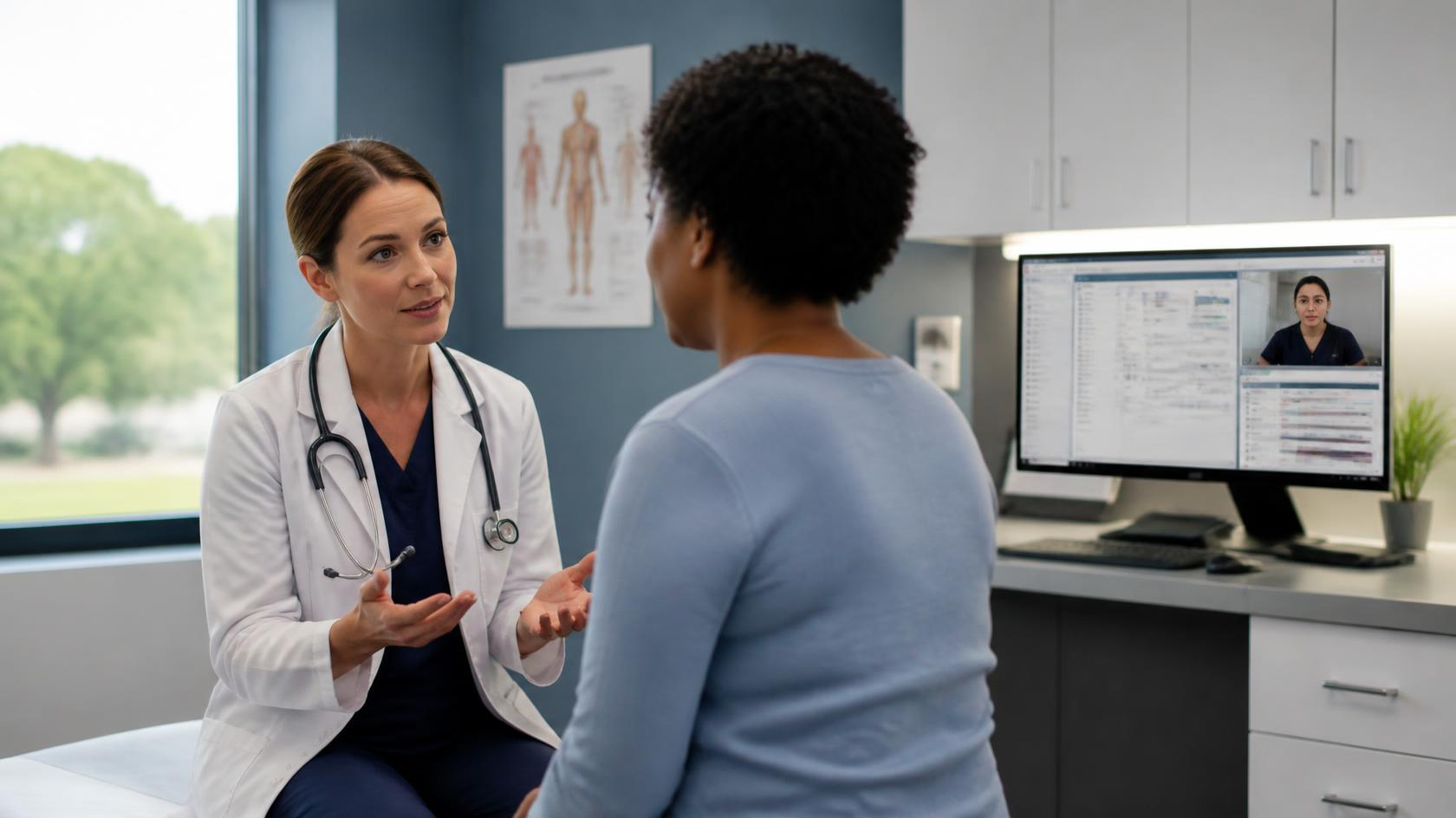
Physicians in the United States spend an average of two or more hours every day on clinical documentation. That's time taken from patients, from family, and from the reason most providers chose this career. Electronic health records were supposed to make things easier. For many, they've done the opposite adding screens, mandatory fields, and click burdens that slow down every encounter.
Medical dictation remains one of the most practical ways to cut through that friction. But the way you dictate matters just as much as whether you dictate at all. Poor habits produce inaccurate notes, compliance gaps, and even more time spent on corrections after the fact.
This guide covers the most effective medical dictation best practices for busy physicians from setting up your environment and choosing the right tools to integrating AI-assisted workflows with a reliable human review step.
Why Medical DictationMatters More Than Ever
2+ hrs
Average daily documentation time per physician
62%
Of physicians cite documentation as a top burnout driver
50–80%
Charting time reduction possible with optimized dictation
99%
Accuracy achievable with AI + Human Review
Documentation burden has quietly become one of the defining challenges in modern medicine. After-hours charting is now common at many practices a pattern that erodes personal time, increases cognitive fatigue, and deepens the provider burnout cycle.
Effective medical dictation especially when paired with modern medical speech recognition technology and a human quality review layer can change this dynamic in a meaningful way. The goal isn't just speed. It's accuracy, completeness, compliance, and notes that actually support continuity of care.
Good documentation isn't about typing faster. It's about capturing the clinical encounter accurately the first time—so you're not revisiting it at 9 p.m.
— Chase Clinical Documentation Team
· Trusted Since 1980
10 Medical DictationBest Practices
These recommendations are grounded in real-world clinical workflow patterns. They apply whether you use a standalone medical dictation service, AI-powered speech recognition, or a hybrid workflow with human review.
1
Dictate in Real Time
The single highest-impact habit change: dictate during or immediately after each patient encounter while clinical details are still fresh. Waiting until the end of a full clinic session leads to missed specifics, merged encounters, and vague language. Real-time documentation also means charts are ready or nearly ready before you leave the office.
2
Use Structured Templates
Begin every dictation with a consistent framework—SOAP format, H&P, or a specialty-specific template your team has agreed on. Structured clinical notes are faster to dictate, easier to review, and far less likely to omit critical details. They also set clear expectations for downstream transcriptionists and coders.
3
Invest in a Quality, Noise-Canceling Microphone
Built-in laptop microphones and consumer headsets are the leading cause of recognition errors in medical speech recognition software. In a busy clinical environment, background noise dramatically degrades output quality especially for medication names and dosages. A dedicated USB headset or standalone clinical-grade microphone with active noise cancellation is worth every dollar.
4
Speak Clearly and at a Natural Pace
AI speech recognition performs best when you speak at a steady, unhurried pace. Enunciate drug names, dosages, and clinical terms deliberately. Avoid trailing off at the end of sentences this is a common cause of transcription gaps that require manual correction and add editing time downstream.
5
Standardize Specialty Terminology
Create a practice-wide glossary of specialty-specific terms, preferred abbreviations, and drug names. If your medical speech recognition platform supports custom vocabularies, use them. Consistent terminology improves recognition accuracy, speeds up editing, and makes downstream medical coding significantly cleaner.
6
Always Review AI-Generated Notes Before Signing
AI medical dictation tools produce first drafts—not final, signed notes. Always review AI-generated documentation before attestation, paying close attention to medication names and dosages, laterality, and clinical conclusions. The most reliable documentation workflows pair AI speed with a human review step, whether that's the physician or a trained editor through an AI medical scribe editing service.
7
Maintain a HIPAA-Compliant Workflow
Never dictate in hallways, shared offices, or open spaces where protected health information could be overheard. Ensure your medical dictation service or software vendor has a signed Business Associate Agreement (BAA) and uses end-to-end encrypted data transmission and storage. HIPAA compliance in documentation is a legal obligation, not a checkbox feature.
8
Connect Dictation Directly to Your EHR
Dictation that flows directly into your EHR eliminates manual import steps and reduces transcription latency. If your current workflow requires audio to be exported to a separate platform and then re-imported, that's friction worth removing. Most modern medical dictation services integrate natively with Epic, Cerner, Athenahealth, eClinicalWorks, and other major platforms.
9
Monitor Documentation Quality
After-hours charting is a symptom of a broken documentation workflow, not an unavoidable cost of practice. If you're regularly finishing notes at home, the root cause is usually delayed dictation, no real-time support, or EHR inefficiency. A virtual medical scribe or AI-assisted documentation workflow resolves this without adding overhead comparable to in-house staffing.
10
Balance AI Speed with Human Expertise
The most effective documentation workflows are hybrid: AI generates a structured draft; a trained human reviewer catches errors before sign-off. This approach—used in Chase's AI medical scribe editing service outperforms fully manual transcription on speed and fully automated AI on accuracy. It also reduces the physician's editing burden by catching issues at the review stage rather than at sign-off.
Practical starting point:
You don't need to implement every documentation improvement at once. Start with real-time medical dictation and a structured note template. These two changes alone can significantly improve documentation efficiency, reduce after-hours charting, and enhance clinical workflow within the first week.
Common MedicalDictation Mistakes to Avoid
Knowing what not to do is just as valuable as knowing what to do. These are the most common documentation errors physicians make with medical dictation and the straightforward fix for each one.
Medical Dictation Mistakes
Dictating from Memory Hours Later
Waiting until the end of a full clinic session to dictate leads to
incomplete details, chronological confusion, and notes that don't
fully reflect what happened in the room.
✔ Fix:
Dictate immediately after each patient—or live during the encounter
with scribe support.
Using Consumer-Grade Microphones
Non-clinical audio input is a primary driver of speech-recognition
errors, particularly for drug names, dosages, and anatomical
terminology in noisy environments.
✔ Fix:
Use a dedicated USB headset or clinical-grade noise-canceling
microphone.
Signing AI Drafts Without Reviewing
AI medical dictation tools are powerful but not infallible. Signing
a draft without review can introduce clinical errors—including wrong
dosages or laterality—into a permanent medical record.
✔ Fix:
Always review AI output before signing. Use an editing service to
catch errors before they reach your queue.
Dictating PHI in Shared Spaces
Dictating patient information in hallways, open offices, or shared
call rooms creates HIPAA exposure even when the intent is simply
to save time.
✔ Fix:
Establish a designated private dictation area or use a
privacy-enabled setup.
Inconsistent Terminology Across the Practice
Mixing abbreviation styles and phrasing trains speech recognition
poorly and creates ambiguity that slows down coding, billing,
and downstream clinical review.
✔ Fix:
Build a practice-level terminology style guide and use it
consistently across all providers.
No Backup Workflow for Technology Failures
Practices that rely entirely on a single dictation tool with no
contingency plan lose efficiency entirely when systems go down.
✔ Fix:
Maintain a backup workflow—manual dictation to a scribe or
transcriptionist for urgent situations.
AI Medical Dictation Comparison
AI Medical Dictation vs. Traditional Dictation
The right approach depends on your practice size, patient volume,
EHR setup, and the complexity of your encounters. Here's a direct
comparison across the options most practices are evaluating in 2026.
Feature
Traditional Dictation
AI Dictation (Solo)
AI + Human Review
Real-time output
Delayed
Instant
Near real-time
Accuracy on complex visits
High
Varies by platform
Highest
Physician correction time
Low
Moderate
Very low
EHR integration
Vendor-dependent
Usually native
Fully integrated
HIPAA compliance
Yes (with BAA)
Yes (when configured)
End-to-end
Best for
High-complexity specialties, operative reports
High-volume outpatient
Most practice types
For most physician practices in 2026, a hybrid AI + human review model
delivers the best balance of speed, accuracy, and documentation quality.
AI handles the initial drafting; trained human editors handle quality
assurance; physicians handle sign-off. Everyone works at the level
they're best suited for.
Best Practices Checklist
Best Practices Checklist
Use this as a quick audit of your current dictation workflow to identify
where the biggest gains are available.
Dictate in real time during or immediately after each encounter
Use a structured note template — SOAP, H&P, or specialty-specific
Use a clinical-grade noise-canceling microphone
Dictate in a private, HIPAA-compliant space
Standardize terminology and abbreviations practice-wide
Review all AI-generated notes before signing
Confirm your dictation vendor has a signed BAA
Connect dictation directly to your EHR system
Aim for same-day chart completion on every patient
Maintain a backup documentation workflow for downtime
Conduct periodic documentation quality audits
Track weekly time spent on documentation to measure progress
Modern Documentation Workflow
How Dictation Fits Into a Modern Documentation Workflow
Medical dictation doesn't operate in isolation. It's one stage in a broader
clinical documentation process that—when optimized—saves every encounter
is fully documented, coded, and filed before the day ends.
1
During the encounter
Capture the Visit in Real Time
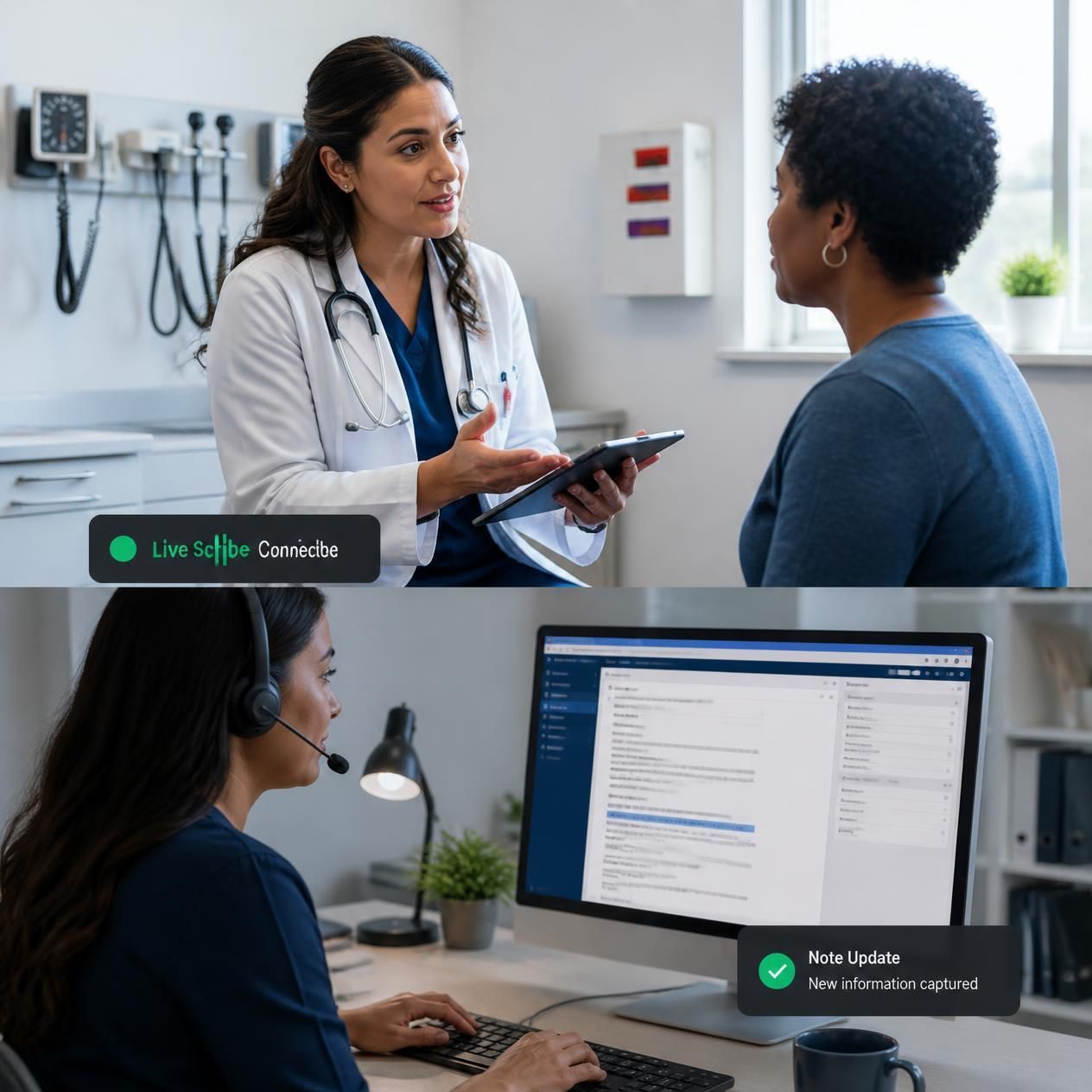
A virtual medical scribe or ambient AI tool documents the
encounter live. The physician stays focused on the patient;
the clinical note is built in the background.
2
Immediate after
Dictate Assessment, Plan, and Addenda
The physician dictates any additional clinical reasoning or
summary points into a medical dictation platform. These
inputs become part of the visit record.
3
AI processing
Speech Recognition Structures the Draft
The dictation is processed by medical speech recognition
software and formatted into a structured SOAP or specialty-
specific note directly inside the EHR.
4
Human quality review
Trained Editor Reviews for Accuracy
A specialist from a medical transcription service or AI
review team validates the draft for errors, missing details,
and formatting issues before it reaches the physician queue.
5
Physician sign-off
Review and Sign in Minutes
A polished note is ready in the queue. The physician reviews,
confirms, and signs—typically in minutes—eliminating after-
hours charting.
6
Downstream impact
Clean Notes Support Coding and Billing
Complete and accurate documentation makes coding significantly
easier, reduces claim denials, and strengthens revenue cycle
performance.
Related Services fromChase Clinical Documentation
Chase has supported physicians with clinical documentation since 1980. These services are built to help your practice implement the best practices described in this guide—and get your documentation working for patient care, not against it.
Medical Dictation Services— Professional dictation support with fast, accurate turnaround for clinical notes and specialty documentation.
Medical Transcription Services— Accurate transcription of dictation, operative reports, and clinical notes for practices and health systems.
Medical Speech Recognition— AI-powered speech-to-text tuned for clinical vocabulary and deep EHR integration across major platforms.
AI Medical Scribe— AI generates the first-draft note; our editors refine it. Speed combined with human accuracy before sign-off.
Virtual Medical Scribe— Dedicated scribes document encounters in real time inside your EHR—charts complete before the last patient leaves.
Medical Coding Services— Certified coders handling ICD-10, CPT, and HCPCS—maximizing revenue accuracy and reducing claim denials.
FAQ
What are medical dictation best practices for physicians?
Medical dictation best practices include dictating in real time during or immediately after patient encounters, using structured templates like SOAP notes, speaking clearly at a moderate pace, reviewing AI-generated drafts before signing, maintaining HIPAA-compliant audio environments, standardizing specialty terminology, using a quality microphone, and connecting dictation directly to your EHR. A human review step improves accuracy significantly before sign-off.
Is AI medical dictation accurate enough for clinical use?
Modern AI medical dictation platforms can achieve 95–99% accuracy for medical terminology. That said, accuracy depends heavily on audio quality, background noise, speech clarity, and how well the platform handles your specialty vocabulary. A human review step such as an AI scribe editing service catches what AI misses and significantly improves note quality before physician sign-off.
What is the difference between traditional dictation and ambient AI?
Traditional medical dictation requires the physician to speak directly into a microphone to narrate the clinical note. Ambient AI listens passively to the natural doctor-patient conversation and automatically generates a structured note draft without the physician narrating anything. Ambient AI eliminates the dictation step entirely, which many physicians find more natural during patient-facing encounters. Both approaches can dramatically reduce charting time compared to manual EHR entry.
How can physicians reduce documentation burden without sacrificing quality?
The highest-impact strategies are adopting real-time dictation, using AI tools with a dedicated human review layer, standardizing clinical note templates, and working with a virtual medical scribe for live documentation support. Consistent same day documentation is the single most effective habit change for most physicians it prevents the backlog that drives after-hours charting.
Does medical dictation help with physician burnout?
Yes. Documentation burden is consistently ranked among the top drivers of physician burnout. Effective medical dictation especially when combined with AI tools or virtual scribe support can reclaim 1–2 hours per day. Eliminating after-hours charting alone has a meaningful, measurable impact on provider satisfaction and work-life balance. Surveys consistently show that reducing documentation time ranks among the top requests physicians have from their organizations.
What microphone should I use for medical dictation?
For best results, use a dedicated noise-canceling USB headset or standalone microphone designed for speech recognition in clinical environments. Built-in laptop microphones and consumer-grade speakerphones are poor choices in busy clinical settings background noise significantly degrades AI transcription accuracy, particularly for drug names and dosages. Audio quality is one of the most direct levers for improving medical speech recognition output.
What types of clinical notes can be created through dictation?
Physicians can dictate virtually any type of clinical documentation: SOAP notes, H&P notes, progress notes, discharge summaries, operative reports, radiology reads, consultation notes, and referral letters. Medical dictation services and transcription specialists can accommodate specialty specific formats and facility specific templates across every major EHR platform.
By Chase Clinical documentation•September 10, 2026
Is a virtual medical scribe worth it for your small practice? This decision guide covers cost, workflow fit, and when a scribe genuinely solves the right problem.
Complex patient histories demand accurate, structured documentation. How a virtual medical scribe handles multi-condition visits so physicians stay focused on care.
One virtual medical scribe can support multiple physicians when the workflow fits. Learn what determines scribe capacity and right staffing ratio for your practice.
Compare live and post-visit virtual medical scribe workflows. Understand which scribing model fits your practice's encounters, EHR workflow, and documentation needs.
Virtual medical scribe vs. an in-house scribe? Compare staffing, costs, EHR workflow, and scalability to find the right documentation model for your practice.
See how AI Medical Scribe technology supports ICD-10 and CPT code capture, reduces undercoding, improves documentation, and helps prevent claim denials.
By Chase Clinical documentation•September 10, 2026
Is a virtual medical scribe worth it for your small practice? This decision guide covers cost, workflow fit, and when a scribe genuinely solves the right problem.
Complex patient histories demand accurate, structured documentation. How a virtual medical scribe handles multi-condition visits so physicians stay focused on care.
One virtual medical scribe can support multiple physicians when the workflow fits. Learn what determines scribe capacity and right staffing ratio for your practice.
Compare live and post-visit virtual medical scribe workflows. Understand which scribing model fits your practice's encounters, EHR workflow, and documentation needs.
Virtual medical scribe vs. an in-house scribe? Compare staffing, costs, EHR workflow, and scalability to find the right documentation model for your practice.
See how AI Medical Scribe technology supports ICD-10 and CPT code capture, reduces undercoding, improves documentation, and helps prevent claim denials.
How NLP in medical scribing enables AI Medical Scribes to understand physicians, interpret clinical language, and generate accurate EHR documentation automatically.