AI Medical Scribe: Voice Recognition vs. Ambient Listening – What's the Difference?

Healthcare documentation has evolved significantly over the past decade. Traditional dictation methods have given way to intelligent documentation tools powered by artificial intelligence, enabling clinicians to spend less time typing and more time caring for patients. Among today's most talked-about innovations are voice recognition and ambient listening, two technologies that often appear interchangeable but serve different purposes.
Understanding voice recognition vs. ambient AI scribe technology is essential for healthcare organizations evaluating modern documentation solutions. While both aim to improve efficiency, reduce administrative burden, and support clinical documentation, they operate differently and are suited to different clinical workflows.
This guide explains how an AI Medical Scribe uses voice recognition and ambient listening, compares the strengths of each approach, and explores how these technologies are reshaping
physician documentation and healthcare workflows across the United States.
Why Documentation Technology Matters
Physicians spend a significant portion of their day documenting patient encounters. Administrative tasks often extend beyond clinic hours, contributing to physician burnout and reducing time available for direct patient care.
Modern AI clinical documentation solutions address these challenges by helping providers:
- Reduce manual documentation
- Improve provider productivity
- Complete notes more efficiently
- Standardize documentation quality
- Support clinical workflow optimization
- Improve EHR documentation consistency
As healthcare organizations seek more efficient documentation workflows, voice recognition and ambient listening have emerged as two leading technologies.
What Is
Voice Recognition?
Voice recognition is a technology that converts spoken words into written text. In healthcare, physicians typically dictate clinical observations, diagnoses, treatment plans, and patient instructions into a microphone or mobile device.
The software transcribes the provider's speech into editable documentation that can later be reviewed and finalized.
Examples of voice recognition use include:
- Dictating patient notes
- Creating consultation reports
- Recording discharge summaries
- Preparing referral letters
- Updating Electronic Health Records (EHR)
Voice recognition has become a valuable tool for physicians who prefer speaking instead of typing.
How Voice
Recognition Works
During documentation, the provider intentionally dictates information after or during the patient visit.
The AI system then:
- Converts speech into text
- Identifies medical terminology
- Recognizes clinical vocabulary
- Organizes dictated content
- Produces draft documentation
- Supports AI medical dictation workflows
Because the clinician controls what is dictated, voice recognition offers flexibility while still requiring active participation throughout the documentation process.
What Is
Ambient Listening?
Ambient listening represents the next generation of AI clinical documentation.
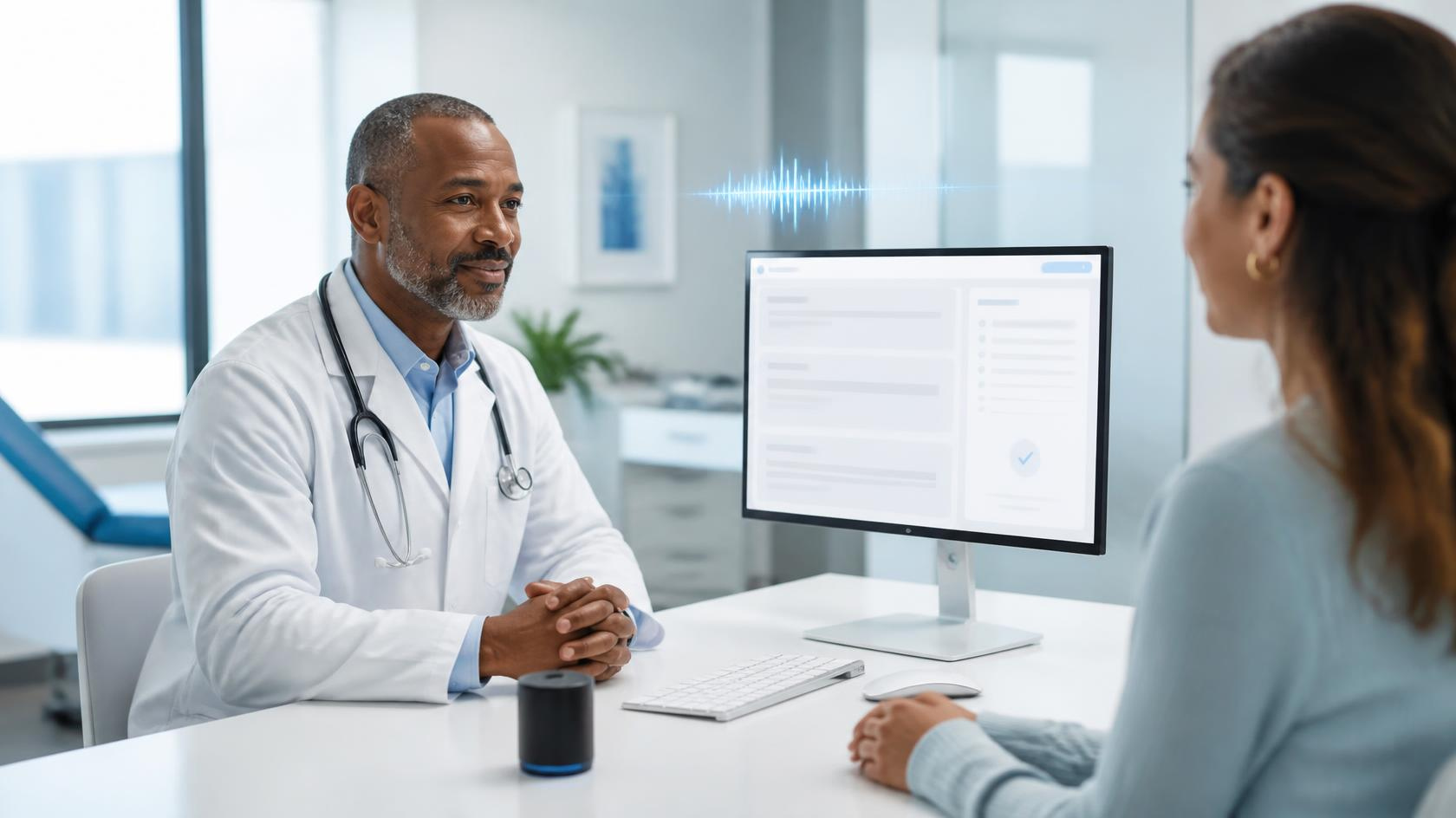
Instead of requiring physicians to dictate notes manually, ambient listening technology captures the natural clinical conversation between the provider and the patient. Artificial intelligence then identifies medically relevant information and generates structured documentation.
The physician reviews the draft before it becomes part of the patient's medical record.
This approach minimizes documentation interruptions and allows providers to focus more fully on patient interactions.

How Ambient AI Works
During a patient visit, ambient AI listens to the conversation in real time.
The system can identify:
- Patient symptoms
- Medical history
- Current medications
- Assessment details
- Treatment discussions
- Follow-up recommendations
- Clinical decisions
Using advanced natural language processing, the AI converts conversational information into organized physician documentation without requiring continuous dictation.
Voice Recognition vs. Ambient AI Scribe:
Understanding the Difference
Although both technologies support clinical documentation, their workflows differ considerably.
Voice recognition depends on intentional dictation by the provider. The physician actively speaks documentation into the system, guiding the content from start to finish.
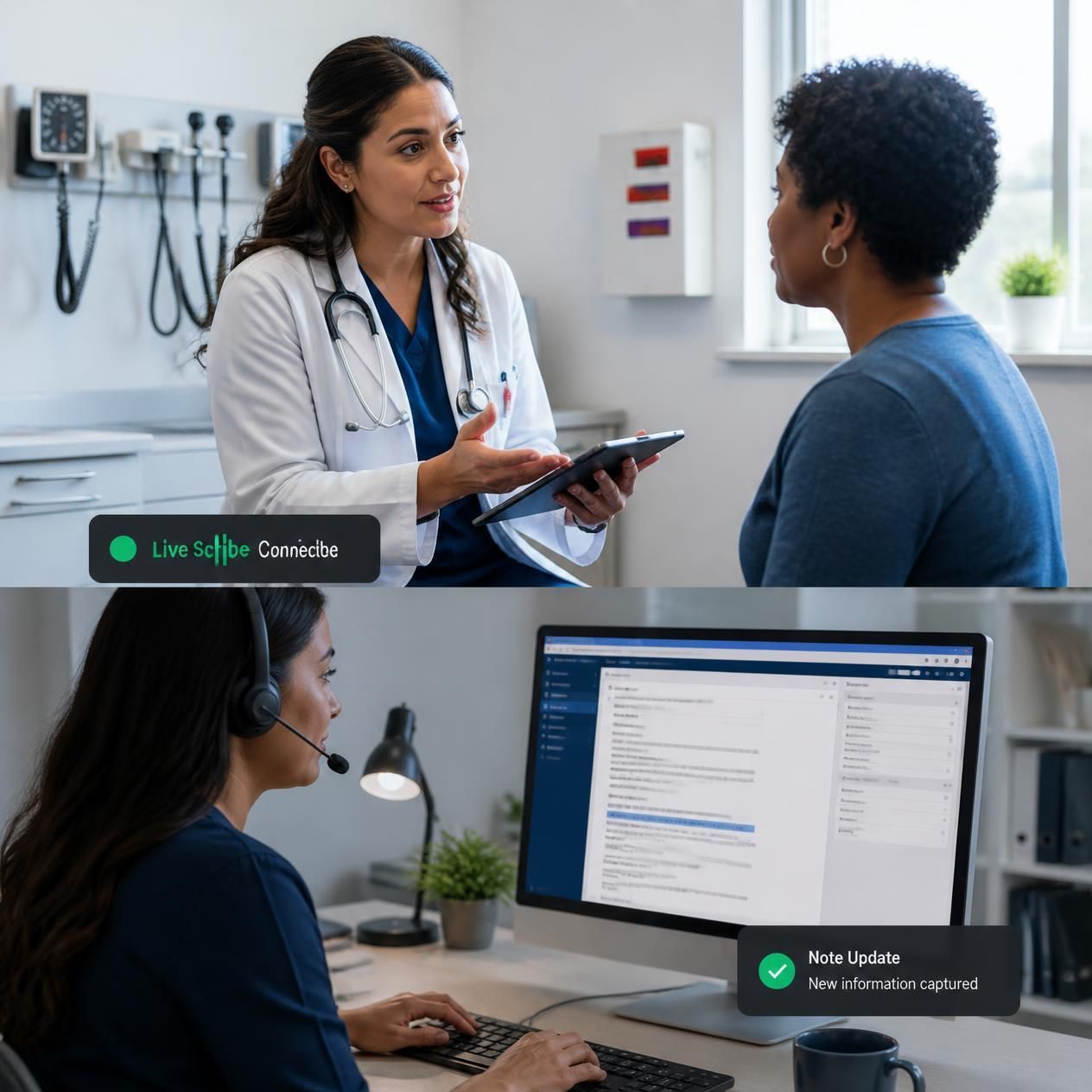
Ambient listening, on the other hand, captures the natural patient encounter and automatically identifies the information needed for structured documentation. Instead of pausing to dictate notes, clinicians can maintain eye contact and engage more naturally with patients while the AI documentation assistant works in the background.
This distinction makes ambient listening particularly attractive for providers seeking to reduce interruptions during patient visits, while voice recognition remains an effective solution for clinicians who prefer direct control over dictated documentation.
Benefits of Voice
Recognition in Healthcare
Voice recognition continues to play an important role in modern healthcare documentation because it is familiar, efficient, and adaptable across many specialties.
Key advantages include:
- Faster documentation than manual typing
- Improved physician productivity
- Accurate medical terminology recognition
- Flexible documentation during or after appointments
- Efficient creation of consultation reports
- Better support for AI medical dictation
- Easier integration with many EHR systems
For providers accustomed to dictation, voice recognition remains a practical and reliable documentation solution.
Benefits of Ambient
Listening Technology
Ambient listening is transforming how physicians interact with patients by reducing the need to focus on documentation during clinical encounters.
Healthcare organizations increasingly adopt ambient AI because it offers several advantages:
- More natural patient conversations
- Reduced administrative workload
- Less after-hours charting
- Improved documentation consistency
- Better clinical workflow efficiency
- Enhanced provider experience
- Greater focus on patient-centered care
- Faster generation of AI SOAP Notes
Rather than interrupting conversations to dictate information, clinicians can concentrate on listening, asking questions, and building stronger patient relationships.
Which
Technology Is Better?
The answer depends on the clinical workflow and provider preferences.
Voice recognition is often ideal for clinicians who prefer structured dictation and greater control over every detail they document. Ambient listening is better suited for providers who want documentation to occur naturally during patient encounters with minimal disruption.
Many modern AI Medical Scribe platforms now combine both capabilities, allowing clinicians to use ambient listening during conversations and voice recognition for additional edits or supplemental documentation when needed.
This hybrid approach provides greater flexibility while supporting accurate, efficient, and consistent clinical documentation.
AI Medical Scribe vs.
Traditional Medical Transcription
Before AI-powered documentation became widely available, many healthcare organizations relied on traditional medical transcription services. In this workflow, providers dictated notes after patient visits, and trained transcriptionists converted those recordings into written documentation.
While medical transcription continues to play an important role in many healthcare settings, today's AI-powered solutions have introduced new efficiencies.
An AI Medical Scribe can generate draft documentation in near real time, reducing turnaround times and helping clinicians complete patient records more quickly. However, traditional medical transcription remains valuable for complex reports, specialty documentation, and situations requiring detailed human review.
Many organizations now adopt a hybrid documentation strategy, combining AI-generated notes with experienced transcription professionals to support documentation quality, compliance, and workflow flexibility.
How AI Medical Scribes
Improve EHR Documentation
Efficient Electronic Health Record (EHR) documentation is essential for continuity of care, clinical decision-making, and reimbursement.
Modern AI Medical Scribe platforms help providers streamline documentation by organizing patient conversations into structured clinical notes that align with existing EHR workflows.
Depending on the platform and clinical workflow, AI can assist with:
- History of Present Illness (HPI)
- Review of Systems (ROS)
- Physical examination findings
- Assessment and Plan
- Progress notes
- Follow-up documentation
- AI SOAP Notes
- Clinical summaries
Rather than replacing the EHR, AI acts as a documentation assistant that helps providers spend less time entering repetitive information while maintaining complete and accurate patient records.
AI Medical Scribe and Virtual Medical Scribes: Working Together
AI technology is transforming documentation, but human expertise remains an important part of healthcare documentation workflows.
Many healthcare organizations use Virtual Medical Scribes alongside AI-powered documentation to support complex cases, specialty-specific workflows, and provider preferences.
This combination offers several advantages:
- Greater documentation accuracy
- Reduced administrative burden
- Improved workflow efficiency
- Better support for complex patient encounters
- Enhanced provider satisfaction
- Flexible documentation options for different specialties
Rather than viewing AI and human scribes as competing solutions, many organizations find that they complement each other by combining automation with clinical expertise.
Choosing the Right AI Medical Scribe Software
Selecting an AI Medical Scribe solution involves more than comparing features. Healthcare organizations should evaluate how well a platform supports their clinical workflow, security requirements, and documentation goals.
Key factors to consider include:
- HIPAA-compliant data handling
- EHR integration capabilities
- Clinical documentation accuracy
- Voice recognition quality
- Ambient listening functionality
- Specialty-specific documentation support
- AI SOAP Note generation
- Workflow customization
- Scalability for growing practices
- Ongoing customer support and training
The right solution should enhance provider productivity while fitting naturally into existing clinical processes.

How EzyScribe Supports
Modern Clinical Documentation
As AI documentation technology continues to evolve, healthcare providers are looking for solutions that combine intelligent automation with practical clinical workflows.
EzyScribe, our AI Medical Scribe software, is designed to help healthcare professionals simplify documentation by leveraging advanced AI-powered clinical documentation capabilities. It supports providers by organizing patient conversations into structured clinical notes that can be reviewed before becoming part of the medical record.
By incorporating technologies such as AI-assisted documentation, voice-enabled workflows, and intelligent note generation, EzyScribe helps reduce repetitive administrative tasks while supporting efficient physician documentation.
Whether providers prefer voice recognition, ambient documentation, or a combination of both, modern AI Medical Scribe software continues to improve clinical workflows without compromising provider oversight.
Best Practices for Using
AI Documentation Technology
Healthcare organizations can maximize the benefits of AI documentation by following proven implementation strategies.
Best practices include:
- Review every AI-generated clinical note before signing.
- Continue using professional medical interpreters when required.
- Train providers on documentation workflows and AI capabilities.
- Verify medications, diagnoses, and treatment plans for accuracy.
- Maintain HIPAA-compliant documentation practices.
- Monitor documentation quality through routine audits.
- Keep AI software updated to benefit from performance improvements.
- Integrate AI tools into existing EHR workflows rather than creating separate documentation processes.
- Educate staff on when voice recognition or ambient listening is the better option.
These practices help maintain high-quality documentation while ensuring AI remains a clinical support tool rather than a substitute for professional judgment.

The Future of
Voice AI in Healthcare
Artificial intelligence continues to reshape healthcare documentation. Future AI Medical Scribe solutions are expected to become even more intelligent, with stronger contextual understanding, improved speaker identification, enhanced multilingual support, and deeper integration with Electronic Health Records.
Emerging innovations are likely to include:
- More accurate ambient clinical documentation
- Improved AI medical charting
- Smarter AI SOAP Note generation
- Better voice AI healthcare capabilities
- Enhanced clinical workflow software
- Faster documentation automation
- Greater interoperability across healthcare systems
- More personalized AI documentation assistants
As these technologies mature, healthcare providers can expect documentation workflows that are more efficient, accurate, and patient-centered.
Conclusion
Both voice recognition and ambient listening have transformed the way healthcare providers approach clinical documentation. While voice recognition remains an effective option for clinicians who prefer structured dictation, ambient listening offers a more natural documentation experience by capturing patient conversations with minimal interruption.
The choice between the two depends on clinical workflow, provider preferences, and organizational goals. Increasingly, healthcare organizations are adopting AI Medical Scribe solutions that combine both technologies to create flexible, efficient, and accurate documentation workflows.
By integrating AI Clinical Documentation with physician expertise, organizations can reduce administrative burden, improve provider productivity, and support better patient experiences all while maintaining the accuracy and compliance required in modern healthcare.
FAQ
What is the difference between voice recognition and ambient AI scribes?
Voice recognition converts spoken dictation into text, while ambient AI scribes listen to natural patient-provider conversations and automatically generate structured clinical documentation for provider review.
Is ambient listening more accurate than voice recognition?
Accuracy depends on the AI platform, audio quality, clinical environment, and provider review. Both technologies require clinician oversight before documentation becomes part of the medical record.
Can AI Medical Scribe software integrate with EHR systems?
Yes. Many AI Medical Scribe platforms integrate with Electronic Health Record (EHR) systems to streamline physician documentation and reduce manual data entry.
Which healthcare providers benefit most from AI Medical Scribes?
Primary care physicians, specialists, urgent care providers, behavioral health professionals, and multi-provider practices can all benefit from AI-assisted clinical documentation.
Does an AI Medical Scribe replace Medical Transcription Services?
Not entirely. AI Medical Scribes automate much of the documentation process, while Medical Transcription Services continue to support complex documentation needs, specialty reports, and detailed human review.
Can AI Medical Scribes generate SOAP notes?
Yes. Many AI Medical Scribe solutions automatically create structured AI SOAP Notes that providers can review, edit, and approve before finalizing.
Is ambient listening suitable for telehealth appointments?
Many AI documentation platforms support virtual consultations, allowing providers to generate documentation during telehealth visits while maintaining natural patient interactions.
Recent Posts