What Happens in the First 30 Days After Hiring a Virtual Medical Scribe?

For many physicians, the end of a clinical day doesn't feel like the end of work. Hours of documentation, back-to-back patient charts, and an EMR system that demands constant attention it's a burden that leads to burnout faster than most expect. Hiring a virtual medical scribe is increasingly becoming the preferred solution for clinics, hospitals, and healthcare organizations across the USA looking to reclaim their time and refocus on patient care.
But what actually happens after you bring one on board? The first 30 days aren't about instant transformation. They're about building a workflow, establishing communication, and laying the foundation for long-term efficiency. Here's a realistic, week-by-week look at what you can expect.
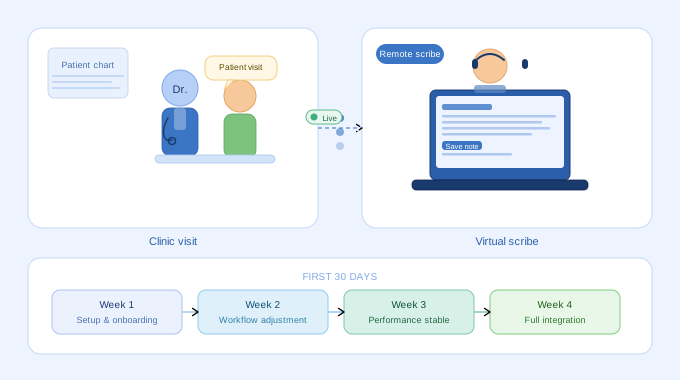
Week 1:
Setup and Onboarding
The first week is primarily administrative and that's completely normal. Before any documentation work begins, your virtual scribe needs to be properly set up within your practice's environment.
Key activities during this phase include:
- Granting secure access to your EMR system with appropriate role-based permissions
- Completing HIPAA compliance verification and data security protocols
- Reviewing your documentation style, preferred templates, and note formats
- Working through an onboarding and training process to understand your specialty-specific workflows
- Sitting in on initial patient encounters (remotely) to observe your communication style
Early challenges are expected here. There may be technical hiccups with access, brief delays in getting credentials approved, or initial questions about preferred documentation formats. Treat this week as an investment the more information you share upfront, the faster the scribe can align with your workflow.
💡 Tip: Prepare a short documentation preferences guide before Day 1. Even a one-page summary of your note structure can cut the learning curve significantly.
Week 2: Workflow Adjustment
By Week 2, real-time documentation begins. Your virtual scribe starts attending patient encounters and drafting notes as appointments happen. This is where the workflow starts taking shape but also where the first friction points typically emerge.
What starts improving:
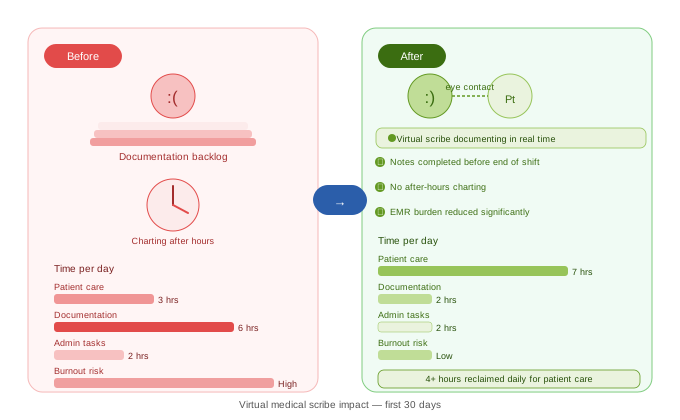
- Notes are being drafted in real time, reducing your post-visit charting time
- You spend more of each appointment making eye contact with patients rather than typing
- Basic documentation tasks like HPI and assessment formatting begin to feel more familiar to the scribe
What still needs adjustment:
- Note accuracy may require frequent corrections this is expected and part of the calibration process
- Communication gaps can occur if preferences weren't fully communicated during onboarding
- The scribe may not yet know your shorthand, preferred phrasing, or how you handle complex cases
Don't be discouraged by the extra time spent on corrections this week. Each piece of feedback you give directly sharpens the scribe's accuracy in the weeks ahead. Consistent, specific feedback is the most powerful tool you have at this stage.
Week 3: Performance Stabilization
Week 3 typically marks a visible turning point. With feedback incorporated, note quality improves noticeably. Physicians report fewer corrections, faster turnaround on drafted notes, and a growing sense that the scribe "understands" their clinical style.
Consider a primary care clinic that brought on a virtual scribe in Week 1. By Week 3, the physician was reviewing not rewriting notes. Simple visit types like follow-ups and medication reviews were being charted with minimal edits. More complex cases still required input, but the baseline documentation was solid enough to build on rather than redo.
- At this stage, you should notice:
- Clinical documentation that matches your preferred note structure more consistently
- Reduced time spent correcting basic elements like demographics, vitals, and chief complaints
- A growing rhythm in how encounters are documented and submitted for review
For hospitals and larger healthcare organizations, this week is also when scribe performance metrics start becoming meaningful. Volume, accuracy rates, and turnaround times can now be tracked with greater confidence.
Week 4: Full Workflow Integration
By the end of Month 1, the workflow should feel noticeably more natural. The scribe has had time to internalize your preferences, adapt to your clinical vocabulary, and anticipate the types of notes each visit type requires.
What full integration looks like:
- Documentation is drafted and ready for your review not your revision after most encounters
- After-hours charting drops significantly, with most notes completed before you leave for the day
- Patient interactions improve because you're no longer splitting attention between the exam and the keyboard
- Specialty-specific nuances, like how you document chronic condition management or procedure notes, are handled with increasing accuracy
For many physicians, this is the week the ROI of hiring a virtual scribe becomes tangible. The initial investment of time and feedback has built a workflow that genuinely reduces daily burden.
What Improves in
30 Days
After one full month, the improvements that clinics, hospitals, and individual providers most commonly report include:
- Documentation efficiency — notes are drafted faster, reviewed quicker, and signed off sooner
- Reduced burnout — less time on administrative tasks means more mental bandwidth for clinical decision-making
- Better patient interaction — providers who aren't typing can listen more attentively and build stronger rapport
- Support for diverse settings — whether you're in a solo practice or a large health system, virtual scribe services scale to fit your volume
That said, the 30-day mark is a milestone, not a finish line. Scribes continue to improve beyond the first month as the working relationship deepens and more complex encounter types are handled with greater confidence.
Common Challenges in the
First 30 Days
Being realistic about challenges is just as important as celebrating the wins. Here's what providers commonly encounter:
- Learning curve: Every physician documents differently. Scribes need time to adapt to your specific style, and that adjustment period requires patience and clear feedback.
- EMR dependency: If your EMR system has complex workflows or custom templates, the scribe will need additional time to navigate them efficiently.
- Communication gaps: Unclear or inconsistent feedback can slow the calibration process. Providers who communicate preferences early and often see faster results.
- AI integration learning: If your scribe service uses AI medical scribe tools, there's an additional layer of learning how the AI-assisted features align with your workflow.
- Resistance to change: Some physicians find it initially uncomfortable to speak with a scribe present during patient encounters. This typically resolves within the first two weeks.
How to Get Better Results Faster
The 30-day experience varies significantly depending on how prepared a practice is going into it. These steps consistently lead to faster, smoother onboarding:
- Share a documentation preferences guide before Day 1 — include your preferred note structure, templates, and common phrases
- Give specific, consistent feedback during the first two weeks — vague corrections slow improvement
- Block 15 minutes weekly for a brief check-in with your scribe or account manager to address recurring issues
- Resist the urge to switch scribes too early — the calibration process takes time, and consistency pays off
- Choose the right vendor — working with an experienced provider like Chase Virtual Medical Scribe Services means you get dedicated support, trained scribes, and a structured onboarding process that reduces friction from the start.
The quality of your onboarding experience is directly linked to the quality of the vendor you choose. Look for services that offer specialty-specific training, responsive support, and transparent performance tracking.
Final
Thoughts
The first 30 days after hiring a virtual medical scribe are a process not a switch you flip. Week 1 is setup. Week 2 is adjustment. Week 3 is stabilization. Week 4 is integration. Each stage builds on the last, and by Day 30, most providers have a meaningfully lighter documentation load than they started with.
The key is setting realistic expectations, staying engaged during the calibration period, and choosing a provider with the experience to support you through it. The benefits less burnout, better patient focus, and reclaimed time are real. They just take a month of collaboration to fully unlock.
Ready to Experience the Difference?
If your practice is ready to reduce documentation burden and refocus on patient care, the first step is a conversation.
Book a demo or get started with Chase Virtual Medical Scribe Services today. See firsthand how a structured 30-day onboarding process sets your practice up for long-term efficiency — starting from Day 1.
Optional
FAQ
How quickly can a virtual medical scribe start working inside my EMR system?
Most scribes begin within the first week after access, compliance checks, and onboarding are completed.
Will my virtual scribe document in real time during patient visits?
Yes. By Week 2, scribes typically join live encounters and document directly inside your EMR during visits.
How accurate are notes in the first few weeks?
Accuracy improves progressively. Week 2 may require corrections, but by Week 3–4, notes become significantly more consistent with your style.
Will a virtual scribe slow me down initially?
Slightly in Week 1–2 due to onboarding and feedback, but efficiency improves quickly after that.
Do I need to train the scribe on my documentation style?
Yes. Sharing templates, preferences, and feedback early is essential for faster alignment and better results.
How secure is EMR access for a virtual medical scribe?
Access is role-based and HIPAA-compliant, with strict data security protocols in place.
What if my EMR system is complex or highly customized?
Scribes can adapt, but complex EMRs may extend the learning curve slightly during the first 2–3 weeks.
How do virtual scribes handle real-time communication during visits?
They listen silently and may use chat or predefined cues if clarification is needed, without disrupting workflow.
What challenges should I expect in the first 30 days?
Common challenges include learning curve, minor communication gaps, EMR navigation, and initial workflow adjustments.
When will I start seeing ROI from a virtual medical scribe?
Most providers begin noticing tangible ROI by Week 4 through reduced documentation time and improved workflow efficiency.
Recent Posts