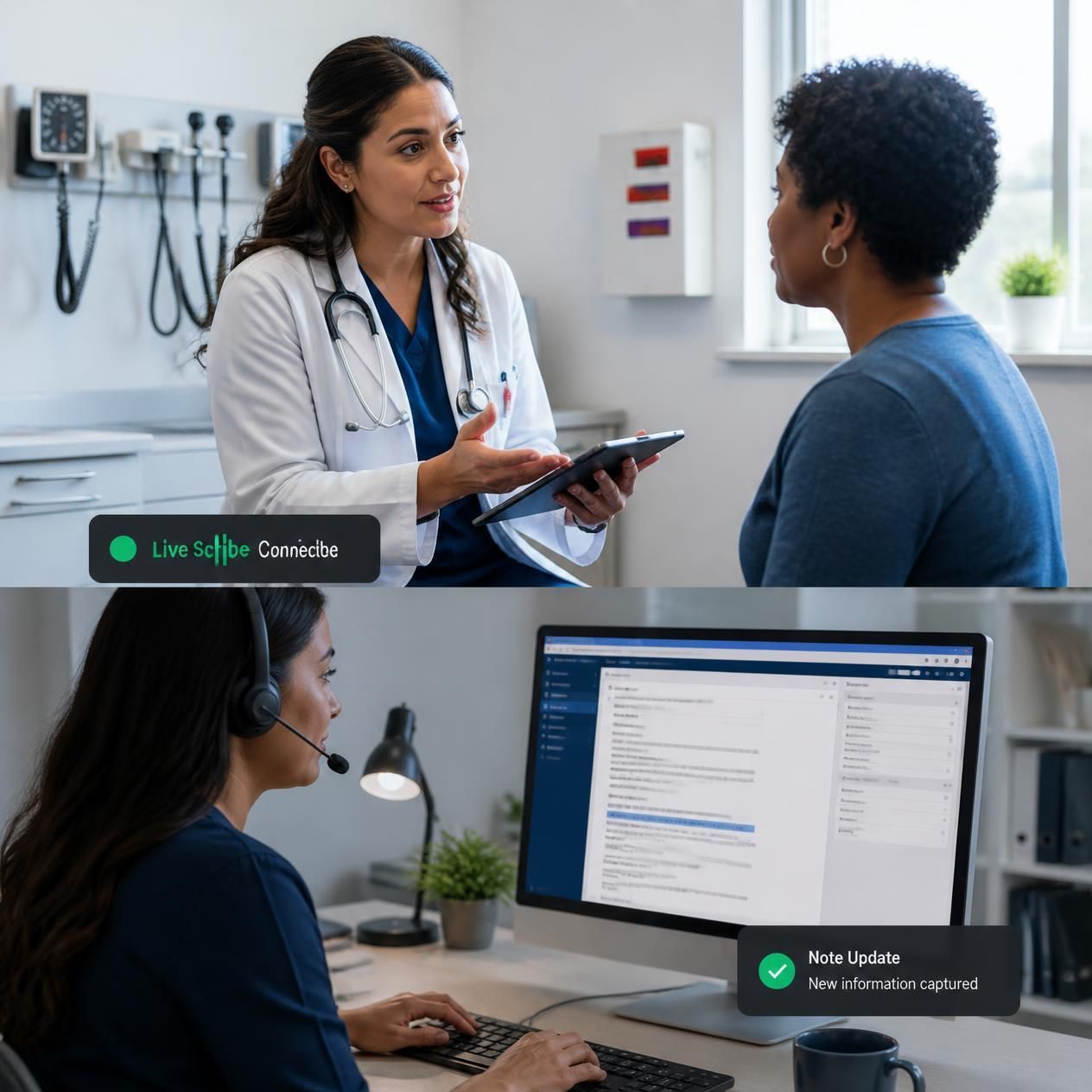
In the healthcare industry, accuracy, efficiency, and compassion are paramount. As technology advances, the
integration of artificial intelligence (AI) into healthcare processes has opened up new possibilities, particularly in areas like medical documentation and data management. However, while AI offers remarkable capabilities, the role of human expertise remains indispensable. Combining AI with human editors creates a powerful partnership that leverages the strengths of both, leading to enhanced outcomes in healthcare. Let’s explore the top benefits of this collaboration.
Enhanced
Accuracy and Precision
One of the most significant advantages of combining AI and human editors in healthcare is the heightened accuracy and precision in medical documentation. AI, powered by advanced algorithms and natural language processing (NLP), can process vast amounts of data quickly and with a high degree of accuracy. It can identify patterns, detect inconsistencies, and ensure that documentation adheres to standardized medical terminology.
However, despite AI’s capabilities, it is not infallible. There are nuances and complexities in medical language that AI might miss or misinterpret. This is where human editors come in. Human editors possess the contextual understanding and clinical insight necessary to catch subtle errors, clarify ambiguities, and ensure that the final documentation is both accurate and clinically relevant. Together, AI and human editors create a system that minimizes errors and enhances the overall quality of medical records.
Increased
Efficiency and Productivity
Efficiency is a critical factor in healthcare, where time is often of the essence. AI can significantly reduce the time spent on routine tasks, such as data entry and initial documentation. By automating these processes, AI allows healthcare providers and human editors to focus on more complex and meaningful tasks that require critical thinking and human judgment.
The collaboration between AI and human editors leads to a more streamlined workflow.
AI handles repetitive tasks
quickly and consistently, while human editors review and refine the output, ensuring that it meets the highest standards. This partnership not only increases productivity but also reduces the administrative burden on healthcare providers, allowing them to devote more time to patient care.
Improved Consistency and
Standardization
Consistency and standardization are vital in healthcare documentation. Inconsistent terminology or variations in documentation styles can lead to confusion, miscommunication, and even errors in patient care. AI excels at applying consistent standards across large volumes of data, ensuring that medical records adhere to the same guidelines and formats.
Human editors enhance this consistency by providing oversight and making adjustments where necessary. They ensure that AI-generated documentation aligns with clinical practices and that any deviations from the standard are justified and clearly explained. This collaboration results in documentation that is both consistent and tailored to the specific needs of each patient, leading to better communication and coordination among healthcare providers.
Enhanced Decision-Making and
Clinical Insights
AI’s ability to analyze large datasets and identify patterns can provide valuable insights that support clinical decision-making. For example, AI can help identify trends in patient data that might indicate the onset of a particular condition or suggest the most effective treatment options based on historical outcomes.
However, while AI can provide data-driven insights, human editors are essential for interpreting these insights within the broader context of patient care. They bring a holistic understanding of the patient’s medical history, current condition, and personal circumstances, allowing them to make informed decisions that consider both the data and the human element. This combination of AI-driven insights and human judgment leads to more accurate diagnoses, more effective treatment plans, and better overall patient outcomes.
Enhanced Patient Trust and
Satisfaction
In healthcare, trust is everything. Patients need to feel confident that their healthcare providers are not only competent but also empathetic and attentive to their needs. While AI can enhance efficiency and accuracy, it lacks the personal touch that is so important in patient care.
Human editors play a crucial role in maintaining the human element in healthcare documentation. They ensure that the patient’s story is accurately captured and that the nuances of their condition are fully understood and communicated. This attention to detail and compassion fosters trust between patients and their healthcare providers, leading to higher levels of patient satisfaction.
Additionally, by relieving healthcare providers of some of the administrative burdens through AI, human editors help ensure that providers can spend more time with their patients. This increased face-to-face interaction further enhances patient trust and improves the overall care experience.
Continuous Improvement and
Learning
The partnership between AI and human editors is not static; it is a dynamic process that evolves over time. AI systems learn from the feedback provided by human editors, becoming more accurate and efficient with each iteration. This continuous improvement benefits both the technology and the healthcare providers who use it.
Human editors, too, benefit from working with AI. They gain access to powerful tools that enhance their capabilities, allowing them to work more efficiently and make better-informed decisions. This symbiotic relationship leads to a cycle of continuous learning and improvement, driving advancements in healthcare documentation and patient care.
Conclusion: A Powerful Partnership for the
Future of Healthcare
The combination of AI and human editors in healthcare represents a powerful partnership that brings together the best of both worlds. AI offers speed, accuracy, and the ability to process vast amounts of data, while human editors provide the critical thinking, contextual understanding, and ethical considerations that are essential in healthcare. Together, they create a system that enhances the accuracy, efficiency, and quality of medical documentation, ultimately leading to better patient outcomes.
As AI technology continues to advance, its role in healthcare will undoubtedly expand. However, the need for human involvement will remain as important as ever. By embracing this partnership, healthcare providers can leverage the strengths of both AI and human expertise, ensuring that the future of healthcare is both technologically advanced and deeply human.
Recent Posts