Virtual Medical Scribe for Medical Practices:
When Does Remote Scribing Make More Sense Than Hiring In-House?
Clinical documentation has never been a secondary concern for physicians but the administrative weight of completing it has grown heavier. Charting after hours, delayed note completion, and documentation backlogs are now everyday realities for many U.S. medical practices.
When practices look for relief, two paths often emerge: hire an in-house medical scribe or engage a
Virtual Medical Scribe service. But the choice between these models involves far more than where the scribe sits. It involves how your practice is staffed, how your workflows are structured, and how your documentation needs will change over time. Getting that decision right requires a practical, operations-level evaluation not just a line-item salary comparison.
What Is a Virtual Medical Scribe?
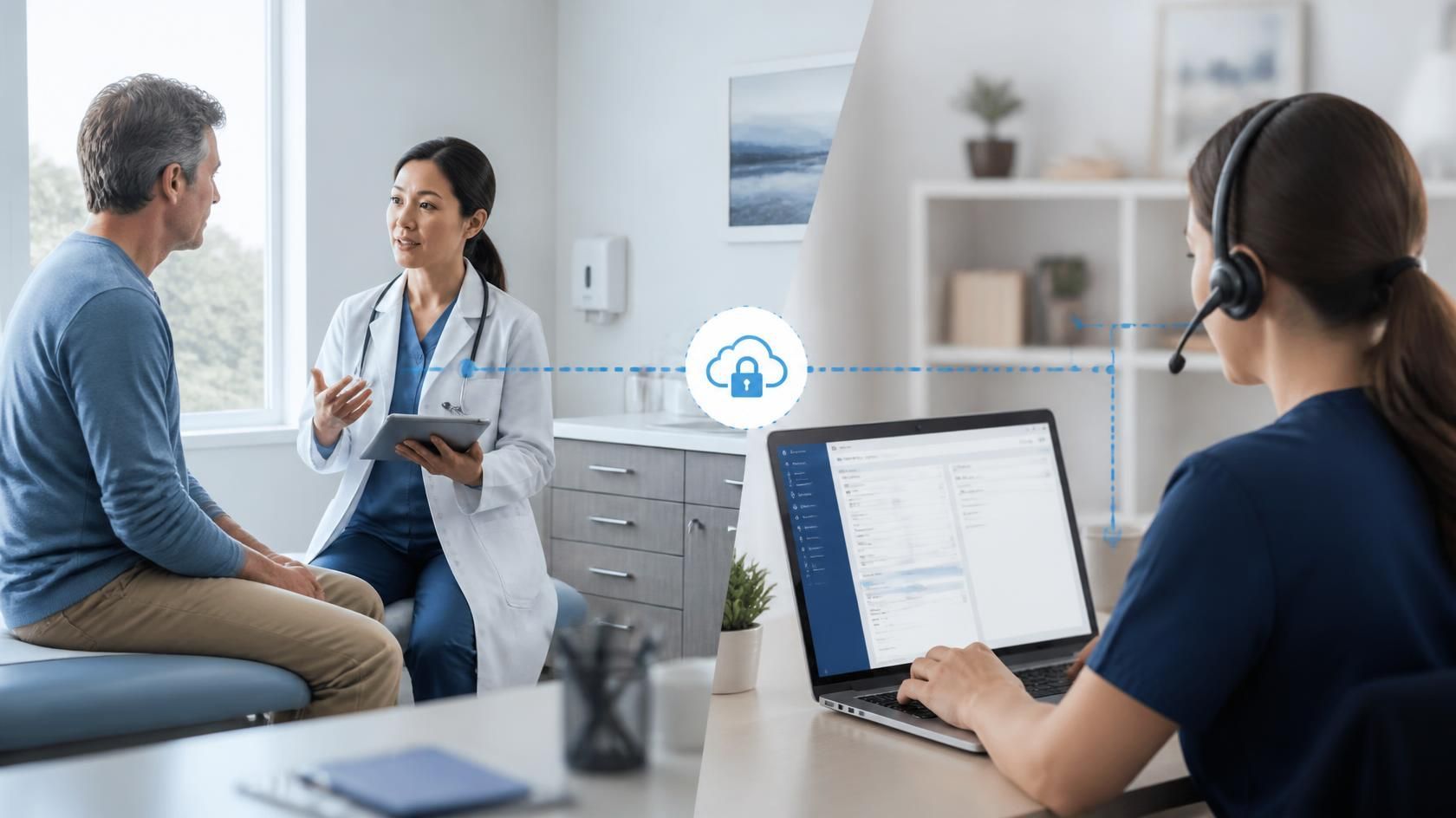
A Virtual Medical Scribe is a trained clinical documentation specialist who works remotely, supporting physicians during patient encounters in real time. They listen via a secure audio or video connection, document findings in the EHR as the encounter unfolds, and prepare completed clinical notes for physician review and sign-off.
The documentation output SOAP notes, assessment and plan sections, clinical summaries is the same whether the scribe is in the room or working remotely. What differs is how that service is delivered, managed, and scaled. Practices evaluating this model can learn more through Chase's Virtual Medical Scribe Services.
Virtual Medical Scribe vs. In-House Scribe:
What's the Difference?
The distinction goes beyond geography. It affects every layer of how your practice manages clinical documentation.
Virtual Medical Scribe vs. In-House Scribe
A side-by-side look at how each documentation model affects your practice's staffing, workflow, and operational overhead.
Neither model is universally superior. The right fit depends on your practice's staffing structure, specialty needs, and growth requirements.

When Does a Virtual Medical
Scribe Make More Sense?
When Staffing and Recruitment Are Becoming a Burden
Finding and keeping qualified in-house scribes is one of the more underestimated operational challenges in medical practice management. Many scribes are pre-professional students motivated, but in transition. Turnover rates are high, and each departure means restarting the recruitment, onboarding, and training process.
For a busy practice, that cycle is disruptive. A new in-house scribe requires time to understand your EHR system, your documentation preferences, and your specialty terminology before they can genuinely support your workflow.
Virtual medical scribe services shift that burden to the vendor. Scribes arrive pre-trained in medical terminology and EHR documentation, with specialty-specific preparation where applicable. When a scribe transition is needed, the vendor manages continuity your clinical workflow doesn't stall while you post a job listing.
When the Practice Needs Flexible Coverage
In-house scribes work scheduled shifts. When patient volumes spike, providers add sessions, or a scribe calls in sick, coverage gaps become a physician problem.
Virtual scribing is structured differently. Coverage can be adjusted to match the actual patient schedule across multiple providers, across varying hours, and across more than one location if the practice operates satellite sites. A physician who works across two clinic locations doesn't need two in-house scribes. A remote medical scribe can follow the provider's schedule wherever it leads.
This flexibility matters especially for multi-provider practices and medical groups where documentation needs are not uniform across the care team.
When Physicians Need More Time for Patient Care
Incomplete documentation at the end of clinic is one of the most consistent contributors to physician after-hours work. Notes that weren't completed during encounters require additional time often evenings or early mornings to finish.
When a trained virtual clinical documentation specialist is managing real-time EHR documentation during each encounter, physicians review and sign off on completed charts rather than building them from scratch. The goal is not simply faster charting it's redirecting the physician's attention back to the patient in the room, and reducing the documentation work that follows them home.
When Specialty Documentation Is Complex
Specialties such as cardiology, neurology, orthopedics, oncology, internal medicine, psychiatry, and urgent care generate clinical notes that require precision and familiarity with specialty-specific terminology and documentation standards.
In-house scribes trained for these encounters are not always easy to find locally. Virtual medical scribe services often offer specialty-matched scribes professionals with documented experience in the relevant clinical environment without requiring the practice to recruit for that expertise independently. For practices where documentation complexity is high and consistent, access to a trained specialist from day one carries real operational value.
Virtual Scribe Cost vs. In-House Scribe: Think Total Cost, Not Just Salary
The salary of an in-house scribe is rarely the full cost of employing one. Practices that evaluate the two models only at the wage level often discover additional expenses once an in-house hire is in place.
Total cost considerations for an in-house scribe typically include:
- Base wages and applicable payroll taxes
- Benefits (health insurance, paid time off, retirement contributions)
- Recruitment costs job postings, agency fees, interview time
- Onboarding and training time, including lost productivity during that period
- Equipment a dedicated workstation, badge access, software licenses
- Workspace allocation within a clinical facility
- Supervision and HR administration
- Cost of coverage gaps during vacations, illness, or departure
Virtual medical scribe services consolidate most of these costs into a service agreement. There is no physical infrastructure to provision, no HR overhead, no recruitment cycle, and no workspace to dedicate.
Pricing for virtual scribing varies by vendor, service model, specialty, and volume. Practices should request detailed proposals and compare them against a realistic total cost calculation for an in-house equivalent not a salary figure in isolation.
How Virtual Scribing Fits
Into the EHR Workflow
One of the most common questions practices ask is whether a remote scribe can genuinely integrate with their EHR or whether the physical distance creates documentation gaps.
In practice, a well-implemented virtual scribing workflow supports the same documentation outputs as in-room scribing. The scribe accesses the EHR under secure, permission-controlled credentials, documents the encounter in real time, and structures the note for physician review. SOAP notes, visit summaries, problem lists, and plan documentation are completed before the physician moves to the next patient.
The key integration factors are audio quality, EHR access configuration, and clear communication between physician and scribe before and during encounters. Practices that establish consistent protocols for encounter start, note preferences, and documentation style tend to see the most efficient results.
Physicians who prefer dictating their clinical encounters can also explore Medical Dictation Services as a complementary documentation pathway within the same workflow.

Is a Virtual Medical Scribe Right
for Every Medical Practice?
The honest answer is no. There are clinical environments and practice models where an in-house scribe continues to make more operational sense.
High-acuity settings such as emergency departments, trauma centers, and procedure-heavy environments often benefit from a scribe who is physically present. These settings involve rapid documentation of visual findings, fast-moving clinical events, and real-time communication where proximity matters.
Some physicians also prefer the in-room presence of a scribe as a workflow preference the ability to gesture, point, or verbally direct documentation in a face-to-face dynamic. In practices with specific organizational policies, patient population sensitivities, or workflow structures built around an in-room support model, an in-house arrangement may remain the better fit.
The decision should reflect the actual clinical environment, not a generalized assumption about which model is superior.
Virtual Medical Scribe
+ AI Scribing: Can Practices Use Both?
Documentation technology has expanded well beyond a single model. Practices today have access to multiple layers of support live virtual scribes, AI Medical Scribe tools that generate draft notes from ambient audio, human review and editing workflows, and traditional Medical Transcription Services for dictated encounters.
These options are not mutually exclusive. A practice might use a Virtual Medical Scribe for complex encounters where real-time human judgment matters, and an AI scribing tool for routine follow-up visits with predictable documentation patterns. A hybrid approach allows practices to calibrate human involvement to the complexity of each encounter type rather than applying one documentation method uniformly across all care settings.
The right combination depends on physician preference, specialty, encounter complexity, and the EHR environment in place.
How to Decide Which
Scribing Model Fits Your Practice
Before committing to either model, consider these operational questions:
- How much physician time is currently spent completing documentation after hours?
- How much difficulty has the practice experienced recruiting and retaining in-house scribes?
- Does the practice need documentation coverage across more than one provider or location?
- How complex and specialty-specific is the average patient encounter?
- Does the clinical environment require physical scribe presence, or can documentation be supported remotely?
- What is the total operational cost of an in-house scribe including wages, benefits, training, and overhead?
- Does the practice anticipate growth, provider additions, or schedule changes that would affect documentation demand?
- Would AI-assisted documentation complement a human scribing layer for certain encounter types?
- Is continuity of coverage during scribe turnover a current operational problem?
- What level of specialty-specific documentation expertise does the practice require?
If staffing complexity, coverage flexibility, and specialty documentation expertise are significant concerns, a Virtual Medical Scribe service deserves serious evaluation. If physical presence is genuinely required by the clinical environment, an in-house or hybrid model may be more appropriate.

Conclusion
The decision between a Virtual Medical Scribe and an in-house scribe is not simply about location. It is a documentation infrastructure decision one that affects physician workflow, staffing overhead, operational continuity, and long-term practice flexibility.
For practices where recruitment is difficult, coverage is variable, documentation complexity is high, or growth is anticipated, virtual scribing offers a structurally different model not just a remote version of the same role. The right answer depends on the practice's clinical environment, staffing structure, specialty requirements, and documentation volume.
If your practice is evaluating virtual medical scribe services,
Chase Clinical Documentation can help you assess a documentation model that aligns with your workflow, specialty, and provider needs. With more than 40 years of clinical documentation experience,
Chase supports practices across a range of specialties and documentation workflows including Virtual Medical Scribe Services, AI Medical Scribe solutions, and Medical Transcription Services.
FAQ
How quickly can a virtual medical scribe be up and running in my practice?
Onboarding timelines vary by vendor and practice complexity, but most virtual medical scribe services can have a trained scribe actively supporting your EHR workflow within one to two weeks of engagement compared to the weeks or months a practice may spend recruiting, interviewing, and onboarding an in-house hire. Specialty-specific preparation typically happens before the scribe joins your first encounter.
What happens to documentation coverage when a virtual scribe is unavailable?
This is one of the more practical advantages of a service-based model. When an in-house scribe is absent, the practice is responsible for finding coverage. With a virtual medical scribe service, continuity is a vendor obligation the service provider manages staffing backup, meaning your documentation workflow is not dependent on a single individual's availability.
Can a virtual medical scribe support a practice that sees patients across multiple locations?
Yes, and this is one of the clearest operational advantages of remote scribing. A physician practicing across two or three locations does not need a separate in-house scribe at each site. A remote medical scribe can follow the provider's schedule across locations, supporting documentation at each site through the same secure connection without any additional workspace, equipment, or staffing at each facility.
Will switching to a virtual medical scribe require changes to how we use our EHR?
Not significantly. Virtual scribes are trained to work within your existing EHR system using your established templates, note structures, and documentation preferences. The primary setup requirements involve configuring secure EHR access credentials and establishing a reliable audio connection for encounters. Most practices do not need to change their EHR platform or rebuild documentation workflows to accommodate a remote scribe.
Is a virtual medical scribe appropriate for complex specialty encounters not just routine visits?
Yes, provided the vendor offers specialty-matched scribes. Practices in cardiology, neurology, orthopedics, oncology, psychiatry, and internal medicine regularly use virtual scribing for high-complexity encounters. The key is whether the scribe has documented experience in your specialty's terminology, documentation standards, and encounter structure which should be confirmed with the vendor before engagement begins.
At what practice size does a virtual medical scribe start to make more operational sense than hiring in-house?
There is no universal threshold, but the operational calculus tends to shift toward virtual scribing in several situations: solo or small-group practices where the HR overhead of a direct hire is disproportionate to the volume; multi-provider practices where documentation demand varies across the care team; and growing practices that need documentation support to scale without adding headcount for each new provider. The more variable the coverage requirement, the stronger the case for a service-based model.
Recent Posts