How Virtual Medical Scribes Support Accurate E/M Coding

Physician documentation has never been more complex or more consequential. With updated Evaluation and Management (E/M) coding guidelines now placing greater emphasis on medical decision-making and total time, the margin for documentation errors has narrowed significantly. For many physicians and practice managers across the United States, keeping up with these demands while delivering quality patient care has become an overwhelming challenge.
That is where the virtual medical scribe has become an essential asset. By supporting real-time, accurate clinical documentation during patient encounters, virtual scribes directly improve the quality of E/M coding protecting revenue, reducing audit risk, and giving physicians more time to focus on care.
This article explores the direct connection between accurate physician documentation, E/M coding accuracy, and why healthcare practices are increasingly turning to virtual scribes as a solution.
Why Accurate E/M Coding Matters in Modern Healthcare
Evaluation and Management codes are the backbone of physician reimbursement. They represent the majority of CPT codes submitted by primary care providers and specialists alike. Getting them right is not just a billing formality it is a financial and compliance imperative.
Revenue implications are significant. Undercoding means leaving reimbursement on the table. Overcoding creates exposure to payer audits, recoupment demands, and potential compliance violations. In either case, documentation quality is the determining factor.
The Centers for Medicare & Medicaid Services (CMS) and commercial payers scrutinize E/M claims closely. Documentation must support the level of service billed. When clinical notes are incomplete, vague, or missing key elements of medical decision-making, coders either downcode to protect the practice or submit claims that may not survive a coding audit.
Beyond revenue, accurate documentation ensures continuity of patient care. Thorough clinical notes improve care coordination, reduce duplicated testing, and give future providers the full clinical picture. The stakes extend well beyond the billing department.
Common Documentation Challenges
That Lead to E/M Coding Errors
Most documentation failures are not the result of negligence. They stem from the structural pressures physicians face every day.
Incomplete Clinical Notes
When physicians are pressed for time, documentation often suffers. Notes may capture the chief complaint and plan but miss critical details the depth of history, the complexity of the presenting problem, or the supporting rationale for a diagnosis. These documentation gaps directly affect E/M code selection and coding integrity.
Missing Medical Decision-Making Elements
Under current AMA guidelines, medical decision-making (MDM) is one of the two primary pathways for selecting an E/M level. MDM requires documentation of the number and complexity of problems, data reviewed and analyzed, and the risk of complications or morbidity. When these elements are not clearly captured in clinical notes, coders cannot accurately support a higher-level E/M code—even if the clinical work clearly justified it.
Time Constraints During Patient Visits
The average physician sees dozens of patients per day. Typing detailed notes while maintaining patient engagement is nearly impossible. As a result, many physicians default to brief, templated documentation that captures the minimum not the full clinical picture needed for accurate charge capture and reimbursement accuracy.
After-Hours Charting and Documentation Fatigue
Studies consistently show that physicians spend significant time completing documentation outside of scheduled hours. This after-hours charting leads to documentation fatigue, retrospective recall errors, and inconsistent note quality. Documentation completed hours after a visit is rarely as accurate or as detailed as notes captured in real time. This compounds coding risk across the entire practice.
How Virtual Medical Scribes
Improve Documentation Accuracy
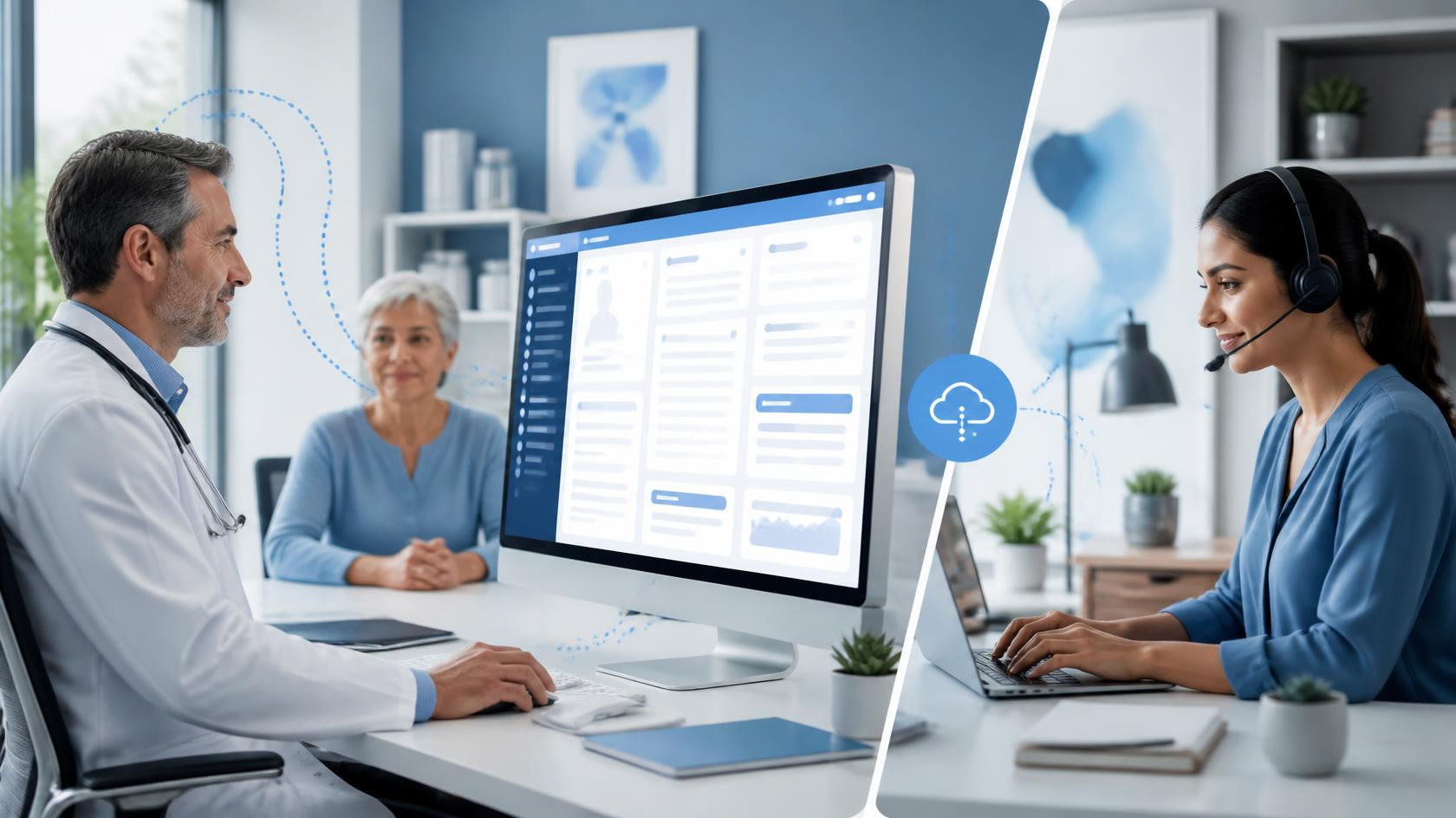
A virtual medical scribe works remotely alongside the physician during patient encounters, listening to the visit in real time and translating it into structured, complete clinical notes within the EHR. The result is documentation that more accurately reflects the clinical work performed which directly supports better E/M coding.
Real-Time Documentation During Patient Encounters
Virtual scribes capture the encounter as it happens. History of present illness, review of systems, physical exam findings, diagnostic reasoning, and treatment plans are all documented contemporaneously. Real-time EMR documentation eliminates the accuracy gaps that come from retrospective charting and ensures the clinical note reflects the full scope of the visit.
More Complete Clinical Notes
Completeness is the foundation of coding specificity. When a scribe captures the nuances of a patient encounter—comorbidities discussed, data reviewed, clinical rationale applied coders have the detail they need to assign the most accurate E/M level. Improved documentation quality directly reduces the likelihood of undercoding and strengthens the defensibility of billed services.
Improved Documentation Consistency
Inconsistency across providers is a common source of coding risk. Virtual scribes apply consistent documentation workflows and follow practice-specific templates, ensuring that clinical notes meet payer requirements and coding standards across the board. This consistency is critical for practices managing multiple providers or preparing for coding audits.
Better Support for Coding Teams
Coders work from what is in the chart. When documentation is thorough and structured, coding accuracy improves. Virtual scribes function as a bridge between the clinical encounter and the revenue cycle. Practices that have addressed EHR documentation challenges through virtual scribing consistently see fewer query backlogs, faster claim submission, and stronger coder productivity.
Reduced Documentation Gaps
Documentation gaps are one of the most common triggers for claim denials and coding downgrades. Missing MDM elements, unspecified diagnoses, or vague clinical reasoning leave coders with insufficient information to support the billed service level. Virtual scribes are trained to capture the clinical details that fill these gaps supporting ICD-10 documentation specificity, CPT coding accuracy, and the medical necessity documentation that payers require.
The Connection Between
Virtual Medical Scribes and E/M Coding Accuracy
This direct impact on the revenue cycle is why virtual scribes have become a clinical documentation improvement tool, not just a workflow convenience. For practices focused on reducing claim denials and improving revenue cycle performance, documentation quality is the lever that moves the needle.
Benefits for Physicians and
Healthcare Organizations
The impact of virtual medical scribes extends beyond coding accuracy. Practices across the United States report measurable improvements in operations and physician experience:
- Reduced physician burnout from lower documentation burd
- Less after-hours charting, improving work-life balance and note quality
- Better coding compliance, reducing exposure to audits and recoupment
- Improved reimbursement accuracy through stronger E/M documentation
- Fewer claim denials tied to incomplete or unclear clinical notes
- Greater provider satisfaction and improved physician retention
- Improved healthcare practice efficiency and faster revenue cycle throughput
For medical directors and healthcare administrators managing physician productivity and revenue cycle performance, these outcomes represent both financial return and operational value.
Real-World Example
Consider a busy primary care practice in the Midwest with four physicians seeing an average of 22 patients per day each. The practice had been experiencing consistent revenue cycle friction: coders frequently queried physicians for missing MDM documentation, claim denials were running above the national average for E/M codes, and physicians were spending nearly two hours per evening completing charts.
After implementing virtual medical scribes for each provider, the practice saw meaningful change within the first 90 days. Clinical notes were completed before the patient left the office. Coders reported that documentation was more thorough and consistently structured, reducing the need for physician queries. The number of E/M claims requiring coder clarification dropped substantially, and claim submission timelines shortened.
Physicians reported fewer hours spent on after-hours charting, and provider satisfaction scores improved during the next quarterly review. The documentation backlog that had accumulated over years was eliminated within two months. For this practice, the virtual scribe did not just improve documentation quality it changed the economics of the revenue cycle.
Why Healthcare Practices Are Investing
in Virtual Medical Scribes
The documentation burden facing U.S. physicians continues to grow. EHR systems, while powerful, were not designed to make clinical documentation fast or intuitive. The result is that physicians spend a disproportionate share of their professional time on administrative tasks time that reduces capacity for patient care and accelerates burnout.
Staffing challenges compound the problem. Many practices cannot hire and retain experienced in-person scribes. Virtual medical scribes offer a scalable, cost-effective alternative that integrates directly with existing EHR platforms. Whether a practice uses Epic, Cerner, Athenahealth, or another system, virtual scribes adapt to the documentation workflow already in place.
For healthcare organizations focused on revenue cycle improvement, documentation quality is the upstream variable that determines coding accuracy, claim approval rates, and reimbursement velocity. Investing in clinical documentation services like virtual medical scribing is, at its core, an investment in the financial health of the practice.
Compliance requirements also drive adoption. With CMS, OIG, and commercial payers all increasing scrutiny of E/M coding, practices that cannot demonstrate documentation support for billed services face meaningful financial and legal risk. Virtual scribes provide a systematic, auditable layer of documentation quality that strengthens compliance across the organization.
Conclusion: Documentation Quality Is the
Foundation of Coding Accuracy
E/M coding accuracy does not start in the billing department. It starts in the exam room, at the moment the physician and patient interact. When that encounter is documented completely, in real time, and with the specificity that modern coding guidelines require, every downstream function improves coding accuracy, claim approval, reimbursement speed, and audit readiness.
Virtual medical scribes make accurate documentation achievable at scale. They reduce the documentation burden on physicians, close the gaps that lead to coding errors, and provide coding teams with the clinical detail they need to support every billed service.
For physicians experiencing documentation fatigue, for practice managers watching claim denial rates climb, and for medical directors focused on revenue cycle performance and physician retention, virtual scribes represent a proven solution with measurable impact.
Ready to improve your E/M coding accuracy through better documentation? Explore Chase Clinical Documentation's
virtual medical scribe services and
AI medical scribe solutions to learn how your practice can benefit. Contact us today to get started.
FAQ
How do virtual medical scribes help with E/M coding?
Virtual medical scribes document patient encounters in real time, capturing the clinical detail required for accurate E/M code selection. By ensuring that medical decision-making elements, time documentation, and diagnosis specificity are fully recorded, scribes give coding teams the foundation they need to assign the correct E/M level.
Do virtual medical scribes improve reimbursement accuracy?
Directly. Accurate E/M coding depends on documentation that supports the selected code level. Virtual scribes ensure clinical notes capture the full scope of the visit including MDM complexity, data reviewed, and treatment risk which enables coders to assign the most accurate, defensible E/M code and submit cleaner claims.
How do virtual medical scribes support compliance?
Virtual scribes help practices maintain coding compliance by ensuring documentation consistently meets payer requirements and AMA E/M guidelines. Thorough, contemporaneous notes reduce audit exposure and provide clear support for every billed service. This documentation quality is one of the most effective defenses against OIG and payer audits.
Can virtual medical scribes work within Epic, Cerner, and Athenahealth?
Yes. Virtual medical scribes are trained to work within major EHR platforms. Whether your practice uses Epic, Cerner, Athenahealth, or another system, scribes adapt to your existing documentation workflow and templates. For more detail, see how virtual scribes integrate with major EHR systems.
Are virtual medical scribes suitable for specialty practices?
Absolutely. Virtual scribes support a wide range of specialties, including internal medicine, family medicine, cardiology, orthopedics, dermatology, and more. They are trained on specialty-specific documentation requirements and adapt to the clinical language and workflow of each practice type.
Recent Posts